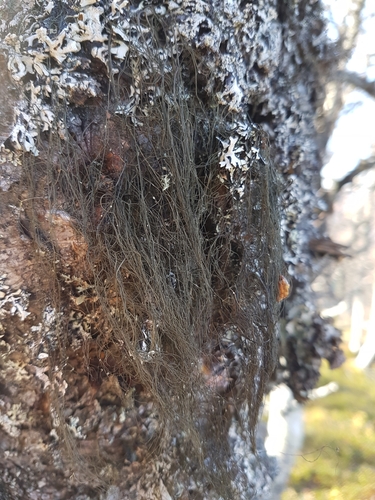
Gray horsehair lichen
Bryoria capillaris
Photo: (c) John Magne Grindeland, some rights reserved (CC BY-NC), uploaded by John Magne Grindeland
Overview
A detailed profile for this species is sourced from the IUCN Red List of Threatened Species as assessments become available.
Pale-footed Horsehair Lichen faces severe threats from air pollution, particularly sulfur dioxide and nitrogen compounds, which are highly toxic to epiphytic lichens. Climate change and habitat loss through deforestation and urban development have further reduced suitable old-growth forest environments essential for this species' survival.
Habitat
This epiphytic lichen grows on the bark and branches of coniferous and deciduous trees in mature and old-growth forests, particularly favoring areas with high humidity and clean air. It is typically found in montane and boreal forest ecosystems where it forms hanging, hair-like structures from tree branches.
Other threatened species in Parmeliaceae


Frequently asked questions
Why is Gray horsehair lichen classified as Critically Endangered?
Where does Gray horsehair lichen live?
What are the main threats to Gray horsehair lichen?
Get weekly conservation intelligence
One short digest a week of the most striking species and country data we ship, plus breaking conservation news paired with our database where it matters.
Free, no spam. One-click unsubscribe in every email.