Pachysaga munggai
Overview
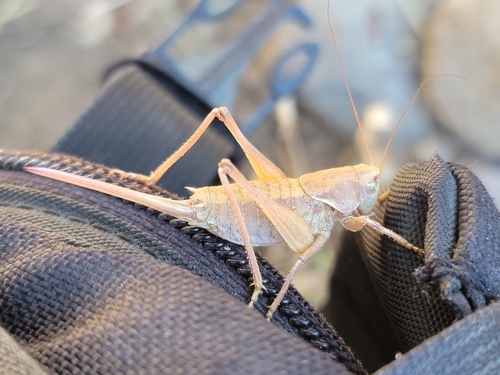
Pachysaga munggai is a large, flightless katydid belonging to the family Tettigoniidae, a group known for their robust bodies, long antennae, and powerful hind legs adapted for jumping rather than sustained flight. Like other members of the genus Pachysaga, it is likely nocturnal, relying on camouflage and cryptic coloration to avoid predators during the day while foraging on vegetation at night. As an insect herbivore, it likely contributes to plant material processing and serves as a prey source for birds, reptiles, and small mammals, forming part of the food web within its native habitat.
The species is endemic to Australia, where it occupies terrestrial habitats, though its precise range and specific ecological requirements remain incompletely documented. No current population estimates are available, and the population trend is listed as unknown, reflecting limited monitoring data for this species.
Pachysaga munggai is classified as Vulnerable, primarily due to ongoing habitat loss driven by agricultural expansion and intensification, along with urban development and associated infrastructure projects. These pressures have contributed to habitat fragmentation, isolating populations and reducing connectivity between suitable habitat patches. As a flightless insect, its capacity to disperse across fragmented landscapes is limited, compounding the effects of small population size, which increases vulnerability to local extinction from stochastic events or genetic decline.
Specific conservation programs targeting this species are not well documented, though its Vulnerable listing under IUCN criteria may support broader habitat protection considerations in land-use planning within its Australian range. Continued agricultural and urban development pressures suggest that, absent targeted habitat conservation measures, the species' outlook remains uncertain, with fragmentation and population isolation posing ongoing risks to its long-term persistence.
Pachysaga munggai is losing its natural habitat as land is cleared for farming and split up by roads, buildings, and other development, leaving smaller and more isolated patches of suitable habitat. Because its population is already small, these losses make the species more vulnerable to further decline. These threats appear to be ongoing and stable, though continued habitat loss could increase risks over time.
Habitat
This species inhabits specialized microhabitats within tropical and subtropical forest ecosystems, typically associated with specific soil conditions and vegetation types. It requires undisturbed forest floor environments with particular moisture and organic matter characteristics.
Other threatened species in TETTIGONIIDAE
Threatened in Australia
Frequently asked questions
Why is Pachysaga munggai classified as Vulnerable?
Where does Pachysaga munggai live?
What are the main threats to Pachysaga munggai?
Get weekly conservation intelligence
One short digest a week of the most striking species and country data we ship, plus breaking conservation news paired with our database where it matters.
Free, no spam. One-click unsubscribe in every email.