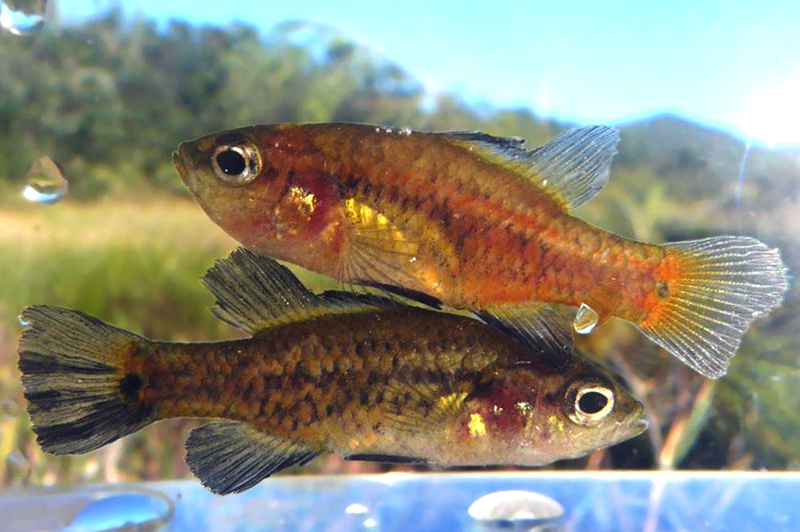
Nannoperca oxleyana
Photo: Wikimedia Commons (CC) via https://en.wikipedia.org/wiki/Nannoperca_oxleyana
Overview
The Oxleyan pygmy perch is a small freshwater fish, typically reaching only 4 to 5 centimetres in length, with a laterally compressed body, brownish colouration, and dark blotches along its flanks. Like other members of the Percichthyidae family, it is a slow-moving species that shelters among dense aquatic vegetation and leaf litter, feeding on small invertebrates. It plays a role in freshwater food webs both as a predator of aquatic invertebrates and as prey for larger fish and birds.
This species is restricted to coastal lowland streams, swamps, and wetlands in eastern Australia, spanning parts of northern New South Wales and southeastern Queensland. It favours slow-flowing or still, often acidic, tea-coloured waters associated with coastal wallum habitats.
Its decline stems from a combination of pressures: urban and residential development draining and fragmenting wetland habitat, sand and gravel mining altering waterways, agricultural runoff and pollution degrading water quality, and drainage or damming disrupting natural hydrology. Altered fire regimes affect surrounding vegetation and catchment stability, while introduced fish species prey on or outcompete it. Recreational activities near waterways contribute to habitat disturbance.
Conservation efforts include habitat protection within some reserves, translocations to establish additional populations, water quality monitoring, and control of invasive fish species in select locations. Research programs continue to track population status and genetic diversity across its fragmented range.
The species remains in decline, with populations increasingly isolated in small, disconnected habitat patches. Its restricted range and dependence on specific water quality conditions make it highly vulnerable to further habitat loss, and its long-term outlook depends on sustained protection of remaining coastal wetland systems.
The Oxleyan pygmy perch faces ongoing habitat destruction from urban development, mining, and farming, along with damage from dams and water management that alter the streams and wetlands it depends on. It's also threatened by pollution, invasive species that compete with or prey on it, and disturbance from fire management practices, logging, and recreational activities near its habitat. With so many pressures continuing at once and no signs of let-up, these threats appear to be ongoing and stable rather than clearly increasing or decreasing.
Habitat
Conservation measures underway
Other threatened species in PERCICHTHYIDAE
Threatened in Australia
Frequently asked questions
Why is Nannoperca oxleyana classified as Endangered?
Where does Nannoperca oxleyana live?
What are the main threats to Nannoperca oxleyana?
Get weekly conservation intelligence
One short digest a week of the most striking species and country data we ship, plus breaking conservation news paired with our database where it matters.
Free, no spam. One-click unsubscribe in every email.