Ou
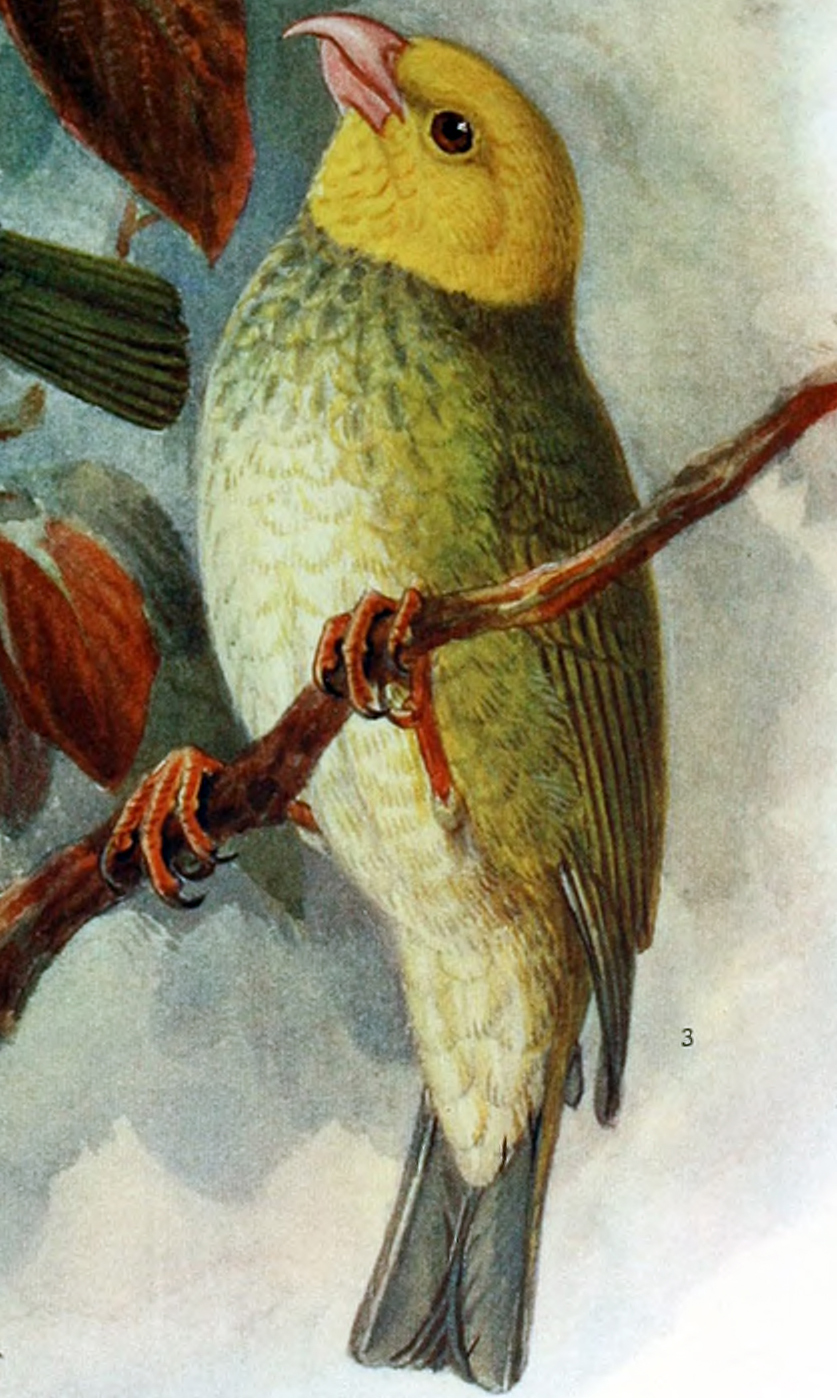
Psittirostra psittacea
Photo: Photo: Wikimedia Commons, CC BY-SA
Overview
The ʻōʻū is an extinct species of Hawaiian honeycreeper that was endemic to the Hawaiian islands. It had a dark green back and olive green underparts; males had a yellow head while females had a green head. Its unusual beak seems to have been adapted to feeding on the fruits of Freycinetia arborea. It had a strong flight which it used to fly considerable distances in search of this vine, but it also ate other fruits, buds, flowers and insects.
The Ou faces severe threats from habitat destruction due to deforestation and agricultural conversion of native Hawaiian forests. Introduced diseases, particularly avian malaria and pox transmitted by non-native mosquitoes, have devastated populations, while competition from invasive bird species and habitat degradation from feral ungulates further threaten this endemic Hawaiian honeycreeper.
Habitat
Native montane wet forests and mesic forests of Hawaii, primarily in ohia-lehua and koa forests at elevations between 1,000-2,100 meters. The species requires dense canopy cover with native flowering trees and shrubs that provide nectar and arthropod prey.
Other threatened species in Fringillidae


Frequently asked questions
Why is Ou classified as Critically Endangered?
Where does Ou live?
What are the main threats to Ou?
Get weekly conservation intelligence
One short digest a week of the most striking species and country data we ship, plus breaking conservation news paired with our database where it matters.
Free, no spam. One-click unsubscribe in every email.