Lord Howe and Norfolk Islands Skink
Oligosoma lichenigerum
Overview
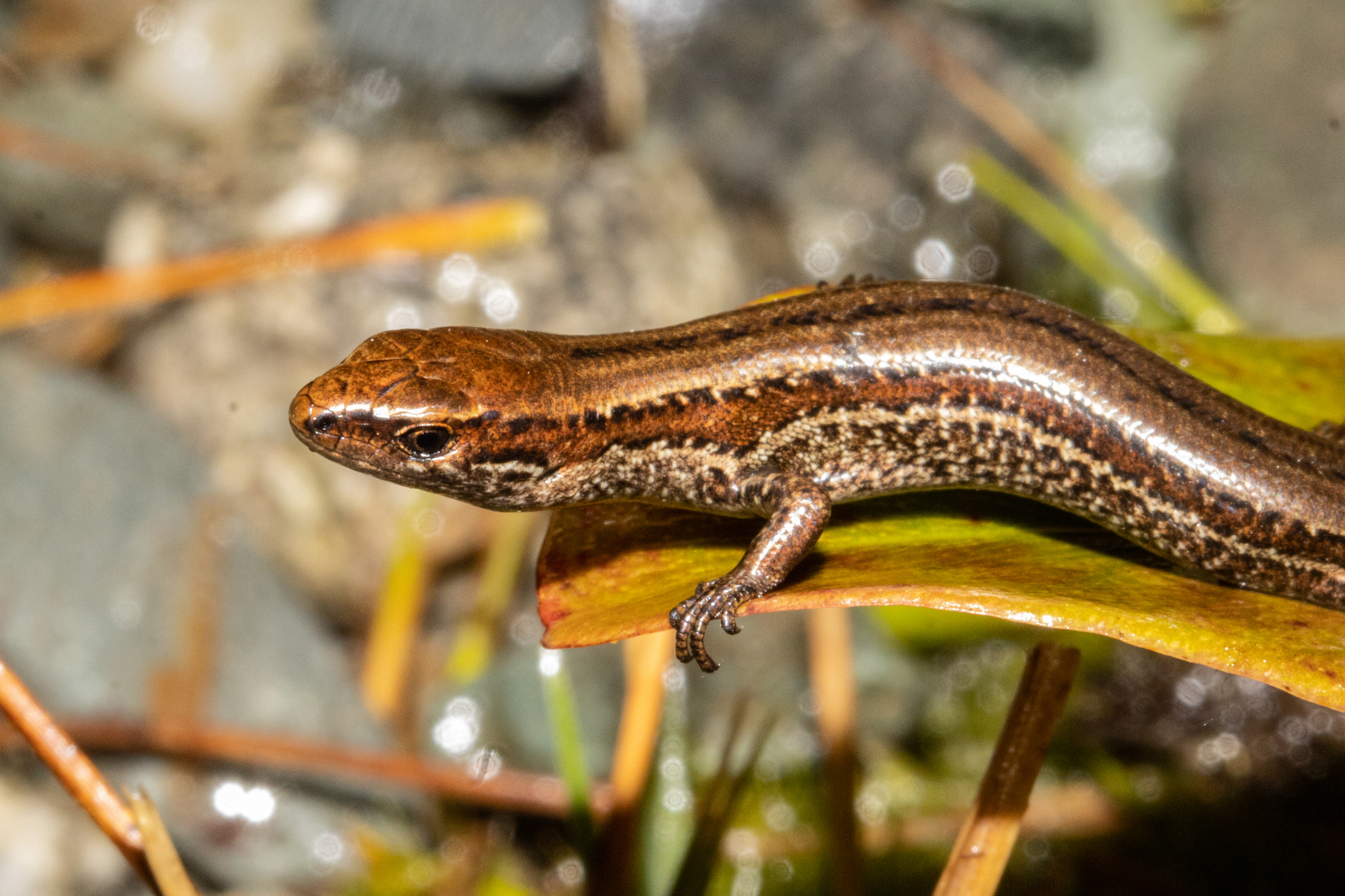
Oligosoma lichenigerum is a ground-dwelling skink within the family Scincidae, characterised by a mottled, lichen-like patterning that provides camouflage among leaf litter and rocky substrates. Like many members of its genus, it is likely diurnal and opportunistically insectivorous, feeding on invertebrates and contributing to nutrient cycling and prey-predator dynamics within its island ecosystem. Population numbers and trends have not been reliably quantified, and the trend is currently listed as unknown.
The species is restricted to Norfolk Island and its surrounding territory, part of Australia's external island possessions, historically extending in association with Lord Howe Island. It occupies shrubland habitats as well as marine coastal and supratidal zones, relying on vegetated cover near the shoreline for shelter and foraging.
Its survival is threatened by a combination of pressures tied to its small, isolated range. Tourism infrastructure and recreational activity degrade and fragment shrubland habitat, while invasive species—likely including rodents and other introduced predators—pose direct predation risk and competition. Ongoing habitat shifting and alteration, logging and wood harvesting, and harvesting of coastal aquatic resources further reduce the extent and quality of usable habitat, particularly along the coastal margins the species depends on.
Conservation attention for Norfolk Island's endemic reptile fauna has increasingly focused on invasive predator control and habitat protection within reserve areas, though species-specific monitoring data for this skink remain limited. Its listing as Vulnerable reflects a restricted range and ongoing habitat pressures rather than a documented population collapse.
Given its confined distribution and multiple concurrent, unmitigated threats, the species' outlook remains precarious. Without sustained invasive species control and habitat safeguards, continued decline is plausible, though the absence of trend data limits precise forecasting.
This skink faces ongoing pressure from tourism development and outdoor recreational activities that disturb its habitat, along with introduced predators and diseases that threaten native populations. Its environment is also being altered by logging operations and shifting land use patterns, while harvesting of aquatic resources adds further strain. Since all these threats are currently listed as ongoing rather than escalating or reducing, the overall threat level appears to be stable.
Habitat
Conservation measures underway
Other threatened species in SCINCIDAE

Threatened in Australia
Frequently asked questions
Why is Lord Howe and Norfolk Islands Skink classified as Vulnerable?
Where does Lord Howe and Norfolk Islands Skink live?
What are the main threats to Lord Howe and Norfolk Islands Skink?
Get weekly conservation intelligence
One short digest a week of the most striking species and country data we ship, plus breaking conservation news paired with our database where it matters.
Free, no spam. One-click unsubscribe in every email.