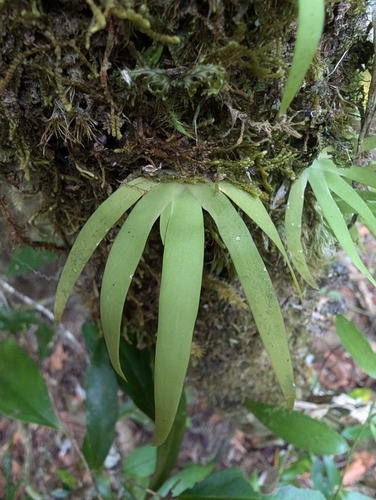
Mossman Fairy Orchid
Oberonia attenuata
Photo: Photo: (c) Daniel Montesinos, some rights reserved (CC BY), uploaded by Daniel Montesinos
Overview
This diminutive terrestrial and epiphytic orchid belongs to the genus Oberonia, a group characterized by small, laterally compressed leaves arranged in fans and slender inflorescences bearing numerous tiny, often intricately patterned flowers. Like other members of its genus, it likely depends on specific pollinators and mycorrhizal fungi for reproduction and germination, playing a modest but specialized role within its ecosystem as part of the epiphytic and terrestrial plant community. Precise population figures are not available, but the species is classified as Critically Endangered, with a decreasing population trend.
The species is restricted to Australia, where it occurs in forest and inland wetland habitats. Its known range is closely tied to the Mossman region of northern Queensland, placing it within a narrow and specific ecological niche that makes it highly vulnerable to localized disturbances.
Threats to this orchid include habitat shifting and alteration, which degrades or removes suitable growing conditions, and the spread of invasive non-native species and diseases, which can outcompete or damage native flora. Additionally, pressures from hunting and trapping of terrestrial animals, and fishing and harvesting of aquatic resources, may indirectly affect the wetland and forest ecosystems on which the orchid depends, through broader habitat degradation and ecological disruption.
Conservation measures specific to this species are not well documented, though its Critically Endangered status under IUCN assessment criteria suggests it may be subject to monitoring and habitat protection considerations within Australia's broader conservation framework for threatened flora.
Given its restricted range, ongoing habitat pressures, and ongoing decline, the species' outlook remains precarious. Without targeted habitat protection and monitoring, continued population decline is likely.
The Mossman Fairy Orchid (Oberonia attenuata) faces ongoing pressure from being illegally collected or removed from the wild, along with harm from invasive species that compete with or damage it. Its habitat is also being altered or shifted over time, likely due to changing land use or environmental conditions, while activities related to harvesting aquatic resources nearby may further disturb its growing environment. These threats appear to be ongoing and stable rather than clearly increasing or decreasing based on current information.
Habitat
Conservation measures underway
Other threatened species in ORCHIDACEAE
Threatened in Australia
Frequently asked questions
Why is Mossman Fairy Orchid classified as Critically Endangered?
Where does Mossman Fairy Orchid live?
What are the main threats to Mossman Fairy Orchid?
Get weekly conservation intelligence
One short digest a week of the most striking species and country data we ship, plus breaking conservation news paired with our database where it matters.
Free, no spam. One-click unsubscribe in every email.