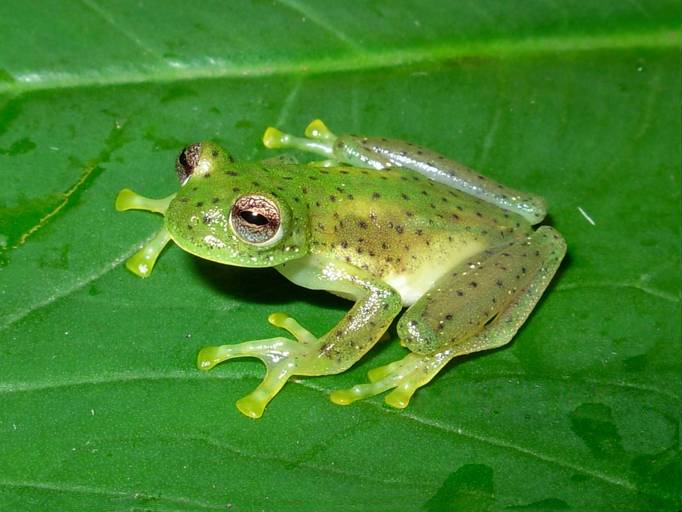
Nymphargus armatus
Overview
A detailed profile for this species is sourced from the IUCN Red List of Threatened Species as assessments become available.
Nymphargus armatus faces severe threats from habitat destruction due to deforestation, agricultural expansion, and urban development within its limited range in the Andean cloud forests. The species is particularly vulnerable to climate change impacts that alter the delicate moisture and temperature conditions of its high-altitude habitat, while pollution and disease outbreaks further threaten remaining populations.
Habitat
This glass frog inhabits pristine Andean cloud forests and montane rainforests at elevations between 1,500-2,500 meters. It requires areas near fast-flowing streams and rivers with dense vegetation cover, particularly favoring the humid microhabitats created by moss-covered rocks and overhanging vegetation along waterways.
Conservation measures underway
Other threatened species in CENTROLENIDAE
Threatened in Colombia
Frequently asked questions
Why is Nymphargus armatus classified as Critically Endangered?
Where does Nymphargus armatus live?
What are the main threats to Nymphargus armatus?
Get weekly conservation intelligence
One short digest a week of the most striking species and country data we ship, plus breaking conservation news paired with our database where it matters.
Free, no spam. One-click unsubscribe in every email.