Throscodectes xederoides
Overview
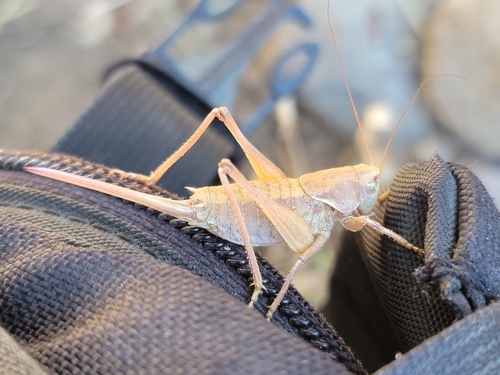
Throscodectes xederoides is a katydid within the family Tettigoniidae, a group typically characterized by long antennae, robust hind legs adapted for jumping, and specialized structures for producing and detecting sound. As with most tettigoniids, individuals are likely cryptically colored to blend with vegetation, relying on camouflage and nocturnal activity to avoid predators. Members of this family generally play ecological roles as herbivores or omnivores, contributing to plant matter cycling and serving as a food source for birds, reptiles, and small mammals.
The species is endemic to Australia, where it occupies terrestrial habitats. No population trend data are currently available, and specific range details remain limited, consistent with the broader data gaps affecting many invertebrate species in this region.
Throscodectes xederoides is classified as Endangered, facing pressure from multiple ongoing threats. Agricultural expansion and intensification are reducing and altering native vegetation cover, while urban and commercial development continues to consume and degrade suitable habitat. These processes contribute to habitat fragmentation, isolating populations and limiting dispersal.
Invasive non-native species pose additional risks, potentially through predation, competition, or habitat alteration. Climate change and associated severe weather events add further pressure by altering microclimates and vegetation structure necessary for the species' survival.
Specific conservation measures targeting this species are not well documented, though it would likely benefit from broader habitat protection initiatives, invasive species control programs, and land-use planning efforts occurring within its Australian range.
Given the combination of ongoing habitat loss, fragmentation, and emerging climate pressures, without targeted monitoring and habitat protection, the species' conservation trajectory remains uncertain. Continued data collection on population status and distribution would be necessary to accurately assess future prospects.
Throscodectes xederoides is losing its natural habitat as land is cleared for farming and expanded for towns and cities, leaving the remaining wild areas smaller and more cut off from each other. It also faces pressure from non-native species moving into its habitat and competing with or preying on it, while shifting weather patterns and climate conditions add further strain. Since all of these threats are currently listed as ongoing, the overall pressure on this species appears to be steady or intensifying rather than easing.
Habitat
This species inhabits specialized microhabitats within temperate forests, particularly favoring areas with specific moisture and temperature conditions. It requires intact forest ecosystems with minimal human disturbance and appears to be dependent on particular host plant associations.
Other threatened species in TETTIGONIIDAE
Threatened in Australia
Frequently asked questions
Why is Throscodectes xederoides classified as Endangered?
Where does Throscodectes xederoides live?
What are the main threats to Throscodectes xederoides?
Get weekly conservation intelligence
One short digest a week of the most striking species and country data we ship, plus breaking conservation news paired with our database where it matters.
Free, no spam. One-click unsubscribe in every email.