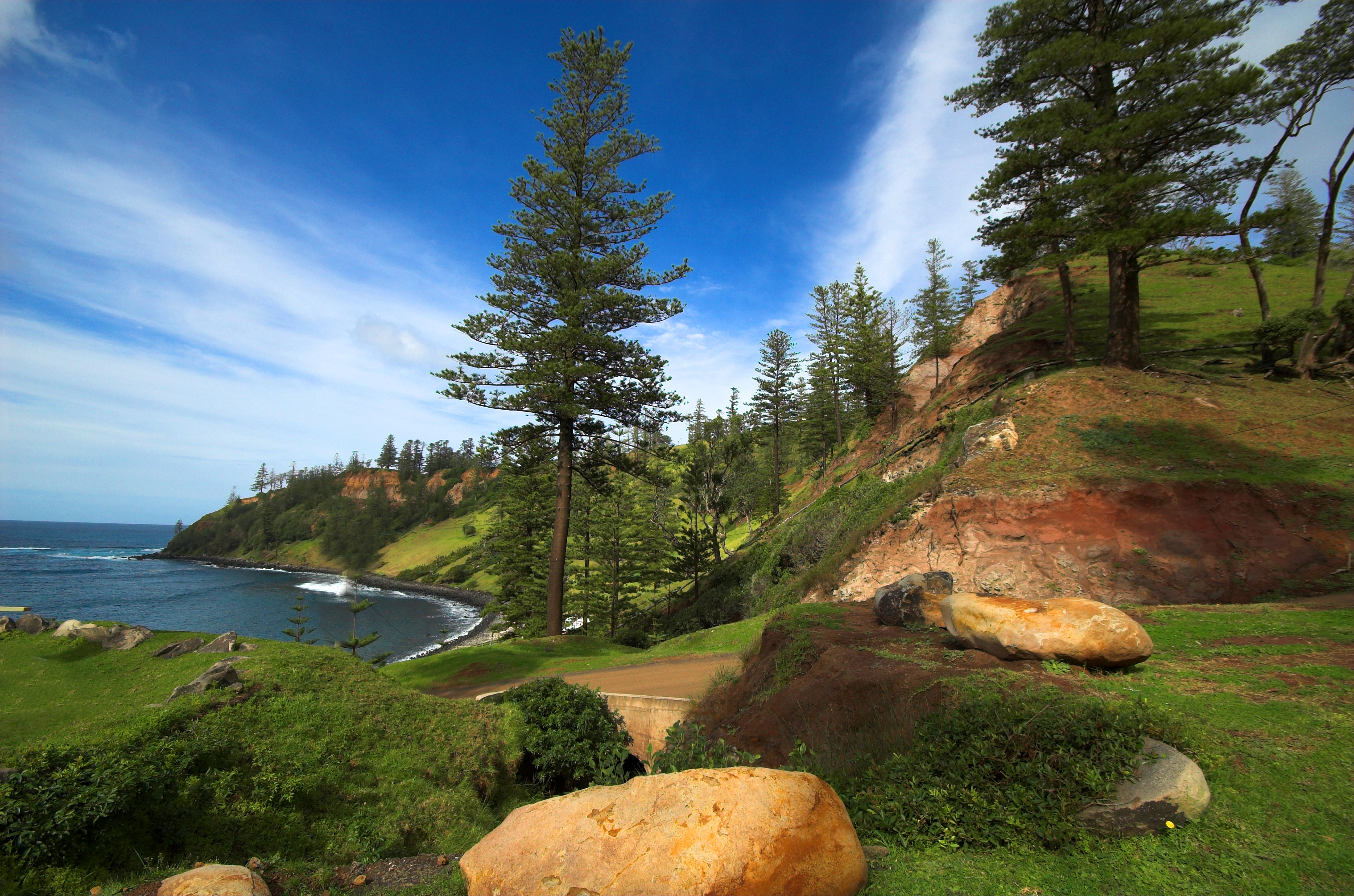
Norfolk Island Pine
Araucaria heterophylla
Photo: Wikimedia Commons (CC) via https://en.wikipedia.org/wiki/Araucaria_heterophylla
Overview
Araucaria heterophylla is a large evergreen conifer characterized by a symmetrical, pyramidal crown formed by horizontal branch tiers, with juvenile foliage that is soft and awl-shaped, becoming denser and more scale-like with age. Mature trees can exceed 50 metres in height, making them among the tallest features of the forests they inhabit. As a long-lived canopy species, it contributes structural complexity to native forest and shrubland communities, providing nesting sites and shelter for birds and other fauna, and its root systems help stabilize coastal and cliffside soils.
The species is endemic to Norfolk Island, a small external territory of Australia in the South Pacific, where it grows in forest, shrubland, and coastal supratidal habitats, often on exposed ridges and cliffs near the shoreline.
Its restricted range makes it inherently vulnerable to localized pressures. Historical and ongoing livestock farming and ranching have degraded remaining habitat through grazing and trampling of seedlings, limiting natural regeneration. Logging and wood harvesting, both historic and continuing on a smaller scale, have reduced stands of mature trees.
Invasive non-native species, including introduced plants, animals, and pathogens, compete with or damage seedlings and alter the composition of native vegetation, further constraining recruitment.
Conservation efforts include protection within Norfolk Island National Park, restrictions on harvesting, and ongoing control programs targeting invasive species and weeds. The tree is also widely cultivated ornamentally worldwide, which has created large ex situ populations, though these do not substitute for wild population security.
The population trend is currently listed as increasing, reflecting the effects of habitat protection and management within its native range. Nonetheless, its naturally restricted distribution means continued vigilance against invasive species and habitat degradation remains necessary to sustain this positive trajectory.
Norfolk Island Pine faces ongoing pressure from land being cleared or grazed for livestock, as well as continued cutting for timber and wood products. It is also being harmed by invasive species and diseases that compete with or damage the trees. All three threats are currently active and ongoing, suggesting a stable but persistent level of risk rather than a clear increase or decrease.
Habitat
Conservation measures underway
Other threatened species in ARAUCARIACEAE
Threatened in Australia
Frequently asked questions
Why is Norfolk Island Pine classified as Vulnerable?
Where does Norfolk Island Pine live?
What are the main threats to Norfolk Island Pine?
Get weekly conservation intelligence
One short digest a week of the most striking species and country data we ship, plus breaking conservation news paired with our database where it matters.
Free, no spam. One-click unsubscribe in every email.