Nanodectes bulbicercus
Overview
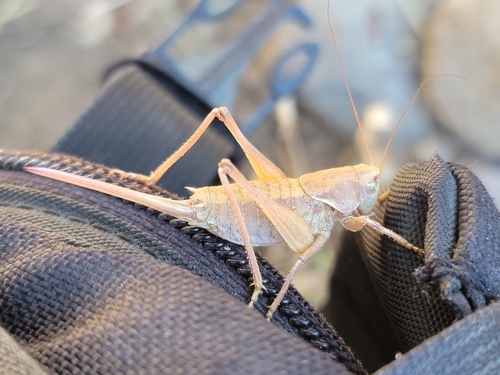
Nanodectes bulbicercus is a small katydid within the family Tettigoniidae, a group characterized by long antennae, specialized hearing organs on the forelegs, and, in many species, cryptic body forms that mimic vegetation. As with other tettigoniids, individuals of this genus are likely nocturnal, relying on camouflage and stridulation for communication and mate attraction. Within its ecosystem, it probably contributes to nutrient cycling and serves as a prey item for birds, reptiles, and small mammals, while also playing a role in vegetation interactions typical of orthopteran herbivores and omnivores.
The species is restricted to Australia, where it occupies terrestrial habitats. Given the specificity of its classification and limited range, it may be a habitat specialist adapted to particular vegetation types or microclimates, though detailed ecological data are not available.
No specific threats have been formally assessed for this species, which is unusual for a species classified as Critically Endangered. This designation typically reflects an extremely restricted range, a very small or declining population, or high vulnerability to habitat disturbance, but the exact drivers affecting Nanodectes bulbicercus have not been documented in available assessments.
No targeted conservation measures are currently reported for this species. Its Critically Endangered status suggests that broader habitat protections in Australia, if applicable to its range, may offer incidental benefit, but no dedicated monitoring, breeding, or recovery programs are known to be in place.
The population trend for Nanodectes bulbicercus is currently listed as unknown, and without baseline population data or long-term monitoring, its trajectory cannot be reliably assessed. Its conservation status highlights significant gaps in knowledge that limit the ability to evaluate its long-term survival prospects.
The threats facing this species have not yet been assessed, so there is currently no documented information on what risks it may face. Without an assessment, it's not possible to say whether any threats are intensifying, stable, or decreasing.
Habitat
Nanodectes bulbicercus inhabits remote montane regions with specific microhabitat requirements that remain poorly understood. The species appears to be restricted to a very limited geographic range, contributing to its critically endangered status.
Other threatened species in TETTIGONIIDAE
Threatened in Australia
Frequently asked questions
Why is Nanodectes bulbicercus classified as Critically Endangered?
Where does Nanodectes bulbicercus live?
What are the main threats to Nanodectes bulbicercus?
Get weekly conservation intelligence
One short digest a week of the most striking species and country data we ship, plus breaking conservation news paired with our database where it matters.
Free, no spam. One-click unsubscribe in every email.