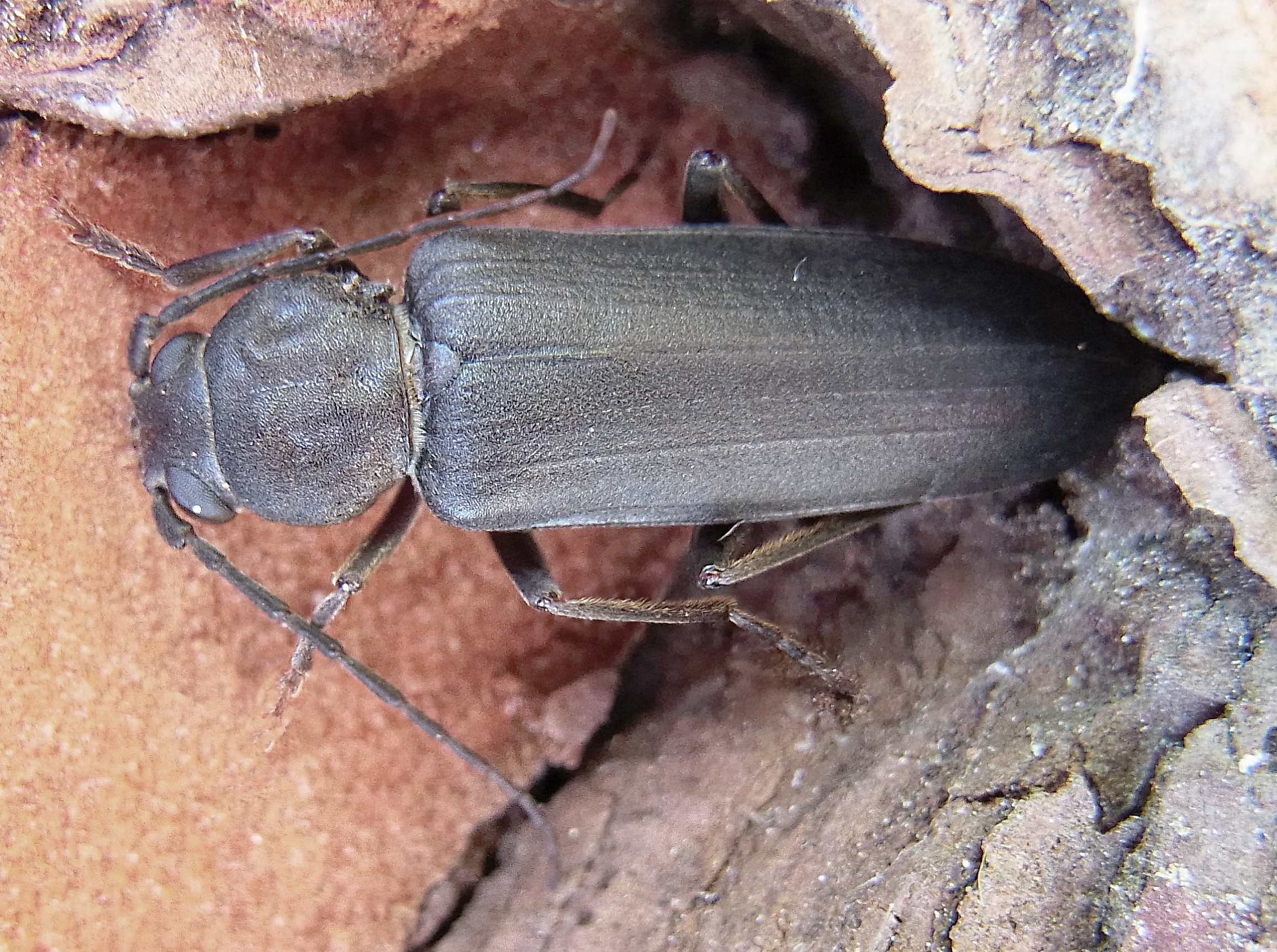
Arhopalus ferus
Photo: Wikimedia Commons (CC) via https://en.wikipedia.org/wiki/Arhopalus_ferus
Overview
Arhopalus ferus is a longhorn beetle in the family Cerambycidae, currently classified as Critically Endangered (CR) according to the IUCN Red List. Adults are elongated, cylindrical beetles with a dark brown to black exoskeleton, long antennae, and the characteristic narrowed 'neck' region behind the head typical of this beetle family. Larvae are wood-boring, developing within the dead or dying wood of coniferous trees, where they tunnel through bark and sapwood over a multi-year larval stage before emerging as winged adults.
This species is associated with coniferous forest habitat, favoring stands of pine and other softwood trees that provide suitable decaying or recently felled timber for larval development. Its range spans temperate forest regions, where it depends on continuity of mature or dead-wood habitat structures rather than intensively managed plantations. As a Critically Endangered species, Arhopalus ferus faces significant risk of extinction in the near term, and its unknown population trend underscores a pressing need for dedicated field surveys and long-term monitoring to establish reliable baseline numbers.
On a more encouraging note, growing interest among forest entomologists in deadwood-dependent saproxylic beetles has led to expanded habitat retention practices in some managed forests, including the deliberate preservation of standing dead trees and coarse woody debris, which directly benefits species like this one. Continued advocacy for saproxylic insect conservation, combined with taxonomic and distributional research, offers a pathway toward better-informed protection measures for this poorly monitored beetle.
The primary threat to Arhopalus ferus is the loss of suitable breeding habitat, particularly a shortage of fire-damaged or recently dead conifer timber required for larval development. Modern forestry practices that promptly remove dead and dying trees reduce the availability of this critical resource. Changes in natural fire regimes within its native range further limit the periodic generation of suitable breeding substrate.
Habitat
Mature coniferous and mixed forests, particularly those with abundant dead or dying spruce, pine, and fir trees that provide breeding substrates. The species requires forests with natural disturbance regimes that create the deadwood microhabitats essential for larval development.
Other threatened species in Cerambycidae


Threatened in Åland Islands


Frequently asked questions
Why is Arhopalus ferus classified as Critically Endangered?
Where does Arhopalus ferus live?
What are the main threats to Arhopalus ferus?
Get weekly conservation intelligence
One short digest a week of the most striking species and country data we ship, plus breaking conservation news paired with our database where it matters.
Free, no spam. One-click unsubscribe in every email.