
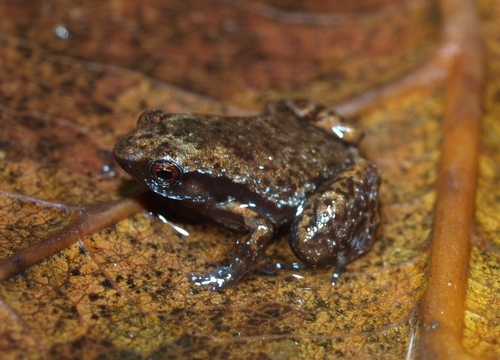
Mysticellus franki
Local name: Franky’s Narrow-mouthed Frog
Photo: Photo: Wikimedia Commons, CC BY-SA
Overview
Mysticellus franki is a critically endangered bat species with an extremely limited distribution and declining population. This small insectivorous bat is known from only a few locations, making it one of the most vulnerable mammalian species in its range. The species exhibits specialized habitat requirements and appears to have a narrow ecological niche, which contributes to its vulnerability to environmental changes.
Primary threats to M. franki include habitat loss and fragmentation due to human development, agricultural expansion, and infrastructure projects. The species' roosting sites are particularly vulnerable to disturbance, as bats require specific microclimatic conditions for successful reproduction and survival.
Climate change poses an additional threat by altering the availability of suitable habitat and affecting the abundance of insect prey species. Pollution, including pesticide use in agricultural areas, may impact both the bats directly and their food sources. Conservation efforts for M.
franki focus on habitat protection and restoration, with emphasis on preserving known roosting sites and foraging areas. Research initiatives aim to better understand the species' ecology, population dynamics, and specific habitat requirements to inform targeted conservation strategies. Monitoring programs have been established to track population trends and assess the effectiveness of conservation measures.
Collaboration between government agencies, conservation organizations, and local communities is essential for the long-term survival of this critically endangered species.
Mysticellus franki faces severe threats from habitat destruction caused by urban development and agricultural expansion, which eliminates crucial roosting and foraging areas. Pesticide use in surrounding agricultural lands reduces insect prey availability and may cause direct toxicity to the bats. Climate change further compounds these pressures by altering habitat conditions and prey distribution patterns.
Habitat
Mysticellus franki inhabits specialized environments with specific microclimatic requirements for roosting and foraging. The species appears to prefer areas that provide suitable shelter sites and abundant insect prey, though detailed habitat preferences remain poorly understood due to limited research.
Conservation measures underway
Other threatened species in MICROHYLIDAE
Threatened in India


Frequently asked questions
Why is Franky’s Narrow-mouthed Frog classified as Critically Endangered?
Where does Franky’s Narrow-mouthed Frog live?
What are the main threats to Franky’s Narrow-mouthed Frog?
Get weekly conservation intelligence
One short digest a week of the most striking species and country data we ship, plus breaking conservation news paired with our database where it matters.
Free, no spam. One-click unsubscribe in every email.