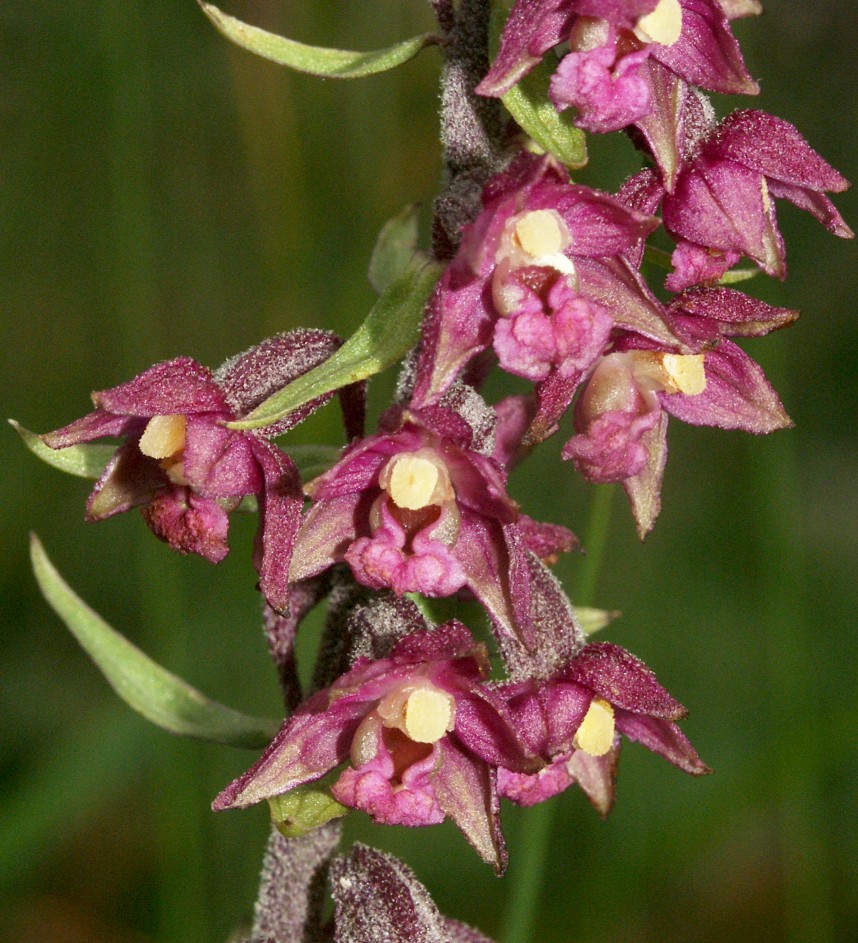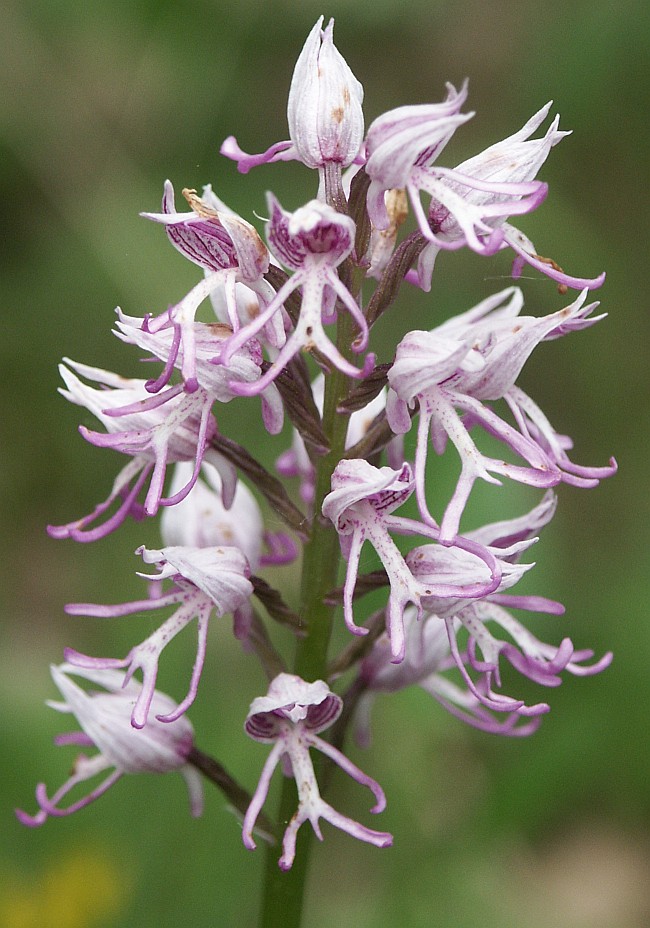
Monkey Orchid
Orchis simia
Conservation status data sourced from the IUCN Red List of Threatened Species.
Photo: Wikimedia Commons (CC) via https://en.wikipedia.org/wiki/Orchis_simia
Taxonomy & Classification
Kingdom
Plantae
Phylum
Tracheophyta
Class
Liliopsida
Order
Asparagales
Family
Orchidaceae
Genus
Orchis
Monkey Orchid belongs to the family Orchidaceae, order Asparagales, within the Liliopsida class.
Species Profile
Species profile data sourced from the IUCN Red List of Threatened Species.
The Monkey Orchid faces severe population declines across its range due to habitat destruction from agricultural expansion and urban development, which has eliminated many of the calcareous grasslands and woodland edges it requires. Overcollection by orchid enthusiasts and changes in traditional land management practices that maintained suitable habitat conditions have further accelerated its decline to critically endangered status.
Key Facts
Habitat & Distribution
Calcareous grasslands, chalk downs, limestone pavements, and open woodland edges on alkaline soils, typically found at elevations from sea level to 1,500 meters. The species requires well-drained, nutrient-poor soils with high calcium content and benefits from light grazing or mowing that maintains open conditions.
Threats
IUCN Red List: Critically Endangered
The Monkey Orchid faces severe population declines across its range due to habitat destruction from agricultural expansion and urban development, which has eliminated many of the calcareous grasslands and woodland edges it requires. Overcollection by orchid enthusiasts and changes in traditional land management practices that maintained suitable habitat conditions have further accelerated its decline to critically endangered status.
Habitat loss from agricultural intensification
Overcollection for horticultural trade
Urban development and infrastructure expansion
Abandonment of traditional grazing practices
Climate change altering suitable habitat conditions
National vs Global Threat Status
How this species is assessed at the national level compared to its IUCN global status (CR).
| Country | National Status | Global Status | Comparison |
|---|---|---|---|
| EU | LCLeast Concern | CRCritically Endangered | Lower local risk |
| EU | LCLeast Concern | CRCritically Endangered | Lower local risk |
| EU | LCLeast Concern | CRCritically Endangered | Lower local risk |
| EU | LCLeast Concern | CRCritically Endangered | Lower local risk |
National Red List data sourced from the National Red List Project (nationalredlist.org, ZSL) and country-specific Red List authorities.
Community Sightings
Report a sightingNo community sightings yet. Be the first to report!
Sources & Attribution
How to Cite
IUCN: IUCN (2025). The IUCN Red List of Threatened Species. Version 2025-1. Available at: https://www.iucnredlist.org. doi:10.2305/IUCN.UK.2025-1.RLTS
GBIF: GBIF.org (2025). GBIF Home Page. Available at: https://www.gbif.org
National Red Lists: ZSL (2025). National Red List. Zoological Society of London. Available at: https://www.nationalredlist.org
This page: SpeciesRadar (2025). Monkey Orchid (Orchis simia). SpeciesRadar: Intelligence for Earth's Biodiversity. Available at: https://speciesradar.org/species/monkey-orchid