Mlingano Monkey Grasshopper
Euschmidtia bidens
Overview
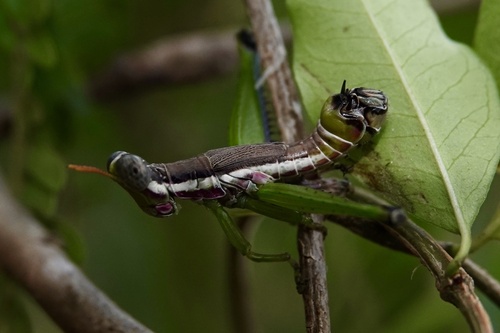
The Mlingano Monkey Grasshopper (Euschmidtia bidens) is a small, cryptically coloured orthopteran belonging to the monkey grasshopper family Eumastacidae, a group known for its compact bodies, reduced wings, and reliance on dense forest-floor vegetation rather than flight for movement. This species is known primarily from the Mlingano area within the East Usambara Mountains of northeastern Tanzania, a biodiversity hotspot renowned for high levels of endemism among invertebrates, amphibians, and plants. It inhabits the leaf litter and low understorey shrubs of lowland and submontane forest, where humidity and canopy cover create the microclimate conditions these grasshoppers depend on for survival.
The species is classified as Critically Endangered (CR) by the IUCN, reflecting its extremely restricted range and the severe pressure on the forest habitat it requires. Much of the East Usambara lowland forest has been cleared or fragmented for agriculture, including tea, cardamom, and subsistence crops, leaving only isolated forest patches that may no longer support viable populations of this narrowly distributed insect. Because Euschmidtia bidens appears to be a single-locality endemic with no evidence of dispersal to other forest blocks, any further loss of its known habitat poses a direct extinction risk.
On a more encouraging note, the East Usambara Mountains are the focus of long-running conservation initiatives, including forest reserve protections and restoration programs supported by Tanzanian conservation authorities and international partners, which have helped safeguard remaining forest fragments and raise awareness of the region's exceptional invertebrate diversity. Continued survey work in the Usambaras also offers hope that additional populations of this grasshopper, or suitable habitat corridors, may yet be identified, informing more targeted conservation action for this little-known but ecologically significant species.
Euschmidtia bidens faces severe threats from habitat destruction due to urban development and agricultural expansion in its limited range. The species' extremely restricted distribution makes it particularly vulnerable to localized environmental changes and human disturbance. Climate change poses additional risks through altered precipitation patterns that could affect the specific microhabitat conditions this species requires.
Habitat
Euschmidtia bidens inhabits specialized terrestrial environments with specific soil and moisture requirements. The species is typically found in areas with particular substrate conditions that support its unique ecological needs.
Other threatened species in EUSCHMIDTIIDAE
Threatened in Tanzania
Frequently asked questions
Why is Mlingano Monkey Grasshopper classified as Critically Endangered?
Where does Mlingano Monkey Grasshopper live?
What are the main threats to Mlingano Monkey Grasshopper?
Get weekly conservation intelligence
One short digest a week of the most striking species and country data we ship, plus breaking conservation news paired with our database where it matters.
Free, no spam. One-click unsubscribe in every email.