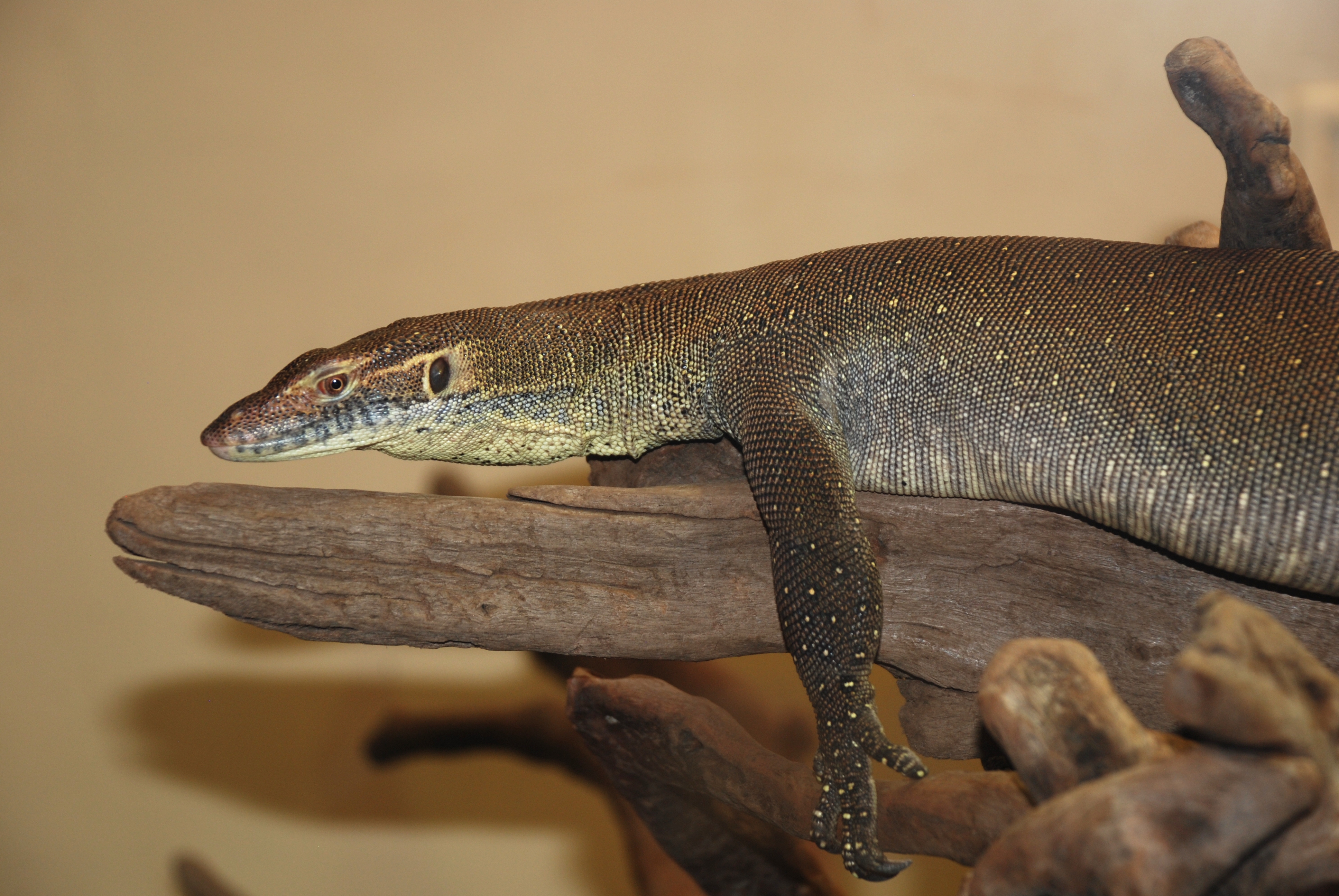
Mertens's Water Monitor
Varanus mertensi
Photo: Wikimedia Commons (CC) via https://en.wikipedia.org/wiki/Mertens'_water_monitor
Overview
Varanus mertensi is a medium-to-large semi-aquatic lizard reaching up to 1 meter in length, characterized by a laterally flattened tail, nostrils positioned high on the snout, and dark olive-brown skin marked with pale spots. Highly adapted to aquatic environments, it swims proficiently using powerful lateral tail movements and can remain submerged for extended periods. As an opportunistic predator, it feeds on fish, crustaceans, insects, small reptiles, and carrion, playing a role in regulating aquatic and riparian prey populations and in nutrient cycling within freshwater ecosystems.
This species is endemic to northern Australia, inhabiting rivers, billabongs, lagoons, and other permanent freshwater bodies across the Northern Territory, Queensland, and Western Australia. It relies on stable water sources with adjacent vegetation for basking, shelter, and nesting.
The species faces mounting pressure from several directions. Tourism and recreational development along waterways disrupt nesting sites and increase human-wildlife encounters. Dam construction and water management practices alter natural flow regimes, reducing habitat quality and availability.
Most significantly, the invasive cane toad (Rhinella marina) poses an acute threat, as this monitor readily preys on toads and suffers fatal poisoning from their toxins, causing severe population crashes in areas following toad invasion.
Conservation responses include monitoring of population declines in cane toad-affected regions, research into toad-aversion training for wild populations, and habitat protection measures within existing protected areas. Broader cane toad control initiatives across northern Australia indirectly benefit this species.
The population trend remains decreasing, with cane toad expansion continuing to affect previously unexposed populations. Without effective mitigation of toad-related mortality and continued habitat pressures, the species' conservation status is likely to remain precarious in the near term.
Mertens's Water Monitor faces ongoing pressure from tourism and recreational activity around the rivers and wetlands where it lives, as well as changes to water flow and levels caused by dams and water management projects. It is also threatened by invasive species, such as cane toads, which are poisonous and often fatal to monitors that try to eat them. These threats are currently stable but ongoing, with no signs of significant increase or decrease.
Conservation measures underway
Other threatened species in VARANIDAE


Threatened in Australia
Frequently asked questions
Why is Mertens's Water Monitor classified as Endangered?
Where does Mertens's Water Monitor live?
What are the main threats to Mertens's Water Monitor?
Get weekly conservation intelligence
One short digest a week of the most striking species and country data we ship, plus breaking conservation news paired with our database where it matters.
Free, no spam. One-click unsubscribe in every email.