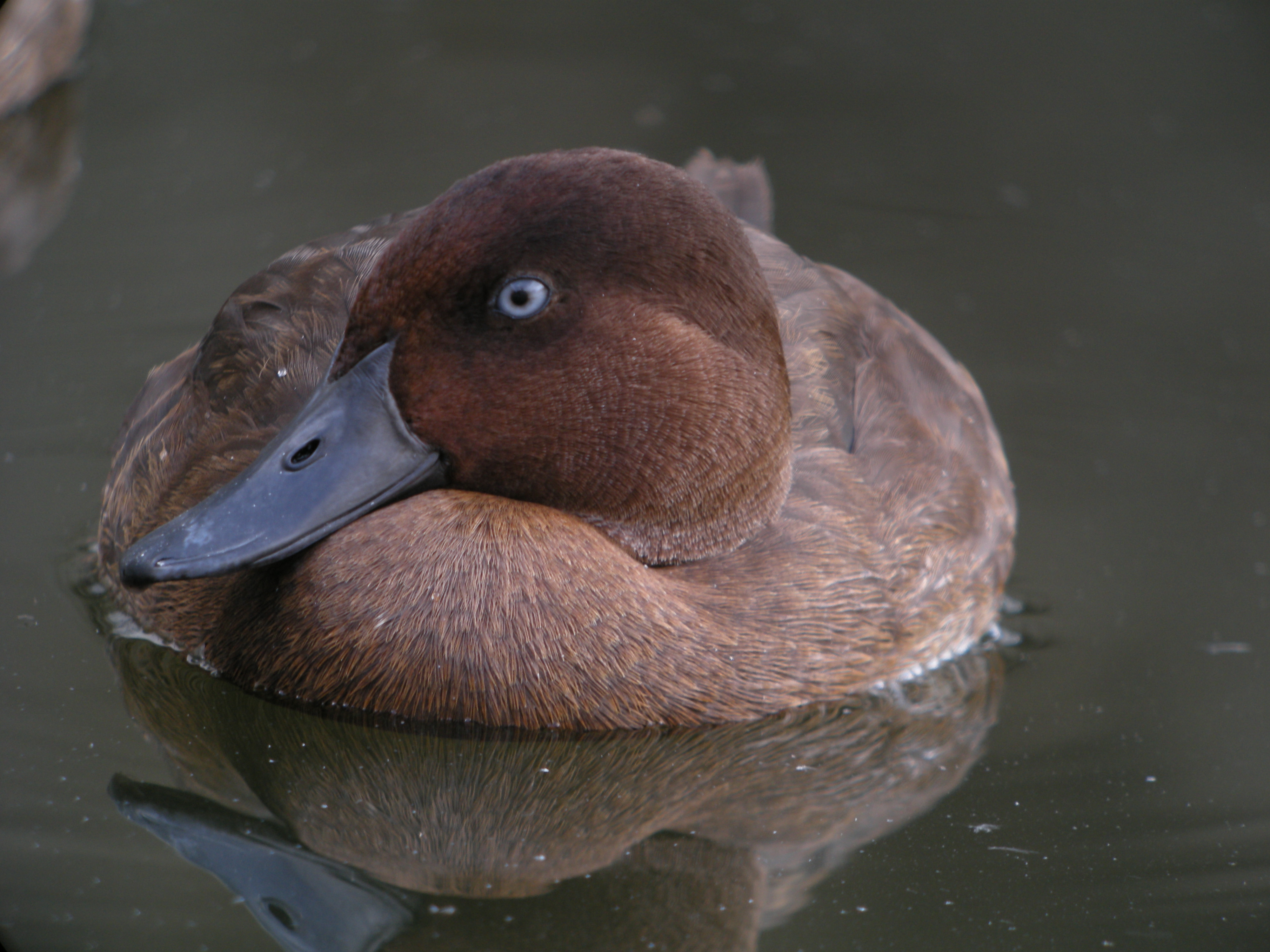
Madagascar Pochard
Aythya innotata
Photo: Wikimedia Commons (CC) via https://en.wikipedia.org/wiki/Madagascar_pochard
Overview
The Madagascar pochard or Madagascan pochard is an extremely rare diving duck of the genus Aythya. Thought to be extinct in the late 1990s, specimens of the species were rediscovered at Lake Matsaborimena near Bemanevika in Madagascar in 2006. By 2017, a captive breeding program had produced a population of around 90 individuals. The birds were reintroduced to the wild in December 2018.
The Madagascar Pochard faces imminent extinction due to severe habitat degradation of its freshwater wetland ecosystems. Introduced fish species have disrupted the aquatic food webs this diving duck depends upon, while agricultural expansion and sedimentation have destroyed critical breeding and foraging areas. The species was thought extinct until a small population was rediscovered in 2006, but continues to decline due to ongoing wetland destruction and invasive species pressure.
Habitat
The Madagascar Pochard inhabits freshwater lakes and marshes with emergent vegetation, particularly favoring deeper waters with submerged aquatic plants. This diving duck requires clean, fish-rich wetlands with suitable nesting sites among dense reed beds and floating vegetation.
Conservation measures underway
Other threatened species in ANATIDAE


Threatened in Madagascar

Frequently asked questions
Why is Madagascar Pochard classified as Critically Endangered?
Where does Madagascar Pochard live?
What are the main threats to Madagascar Pochard?
Get weekly conservation intelligence
One short digest a week of the most striking species and country data we ship, plus breaking conservation news paired with our database where it matters.
Free, no spam. One-click unsubscribe in every email.