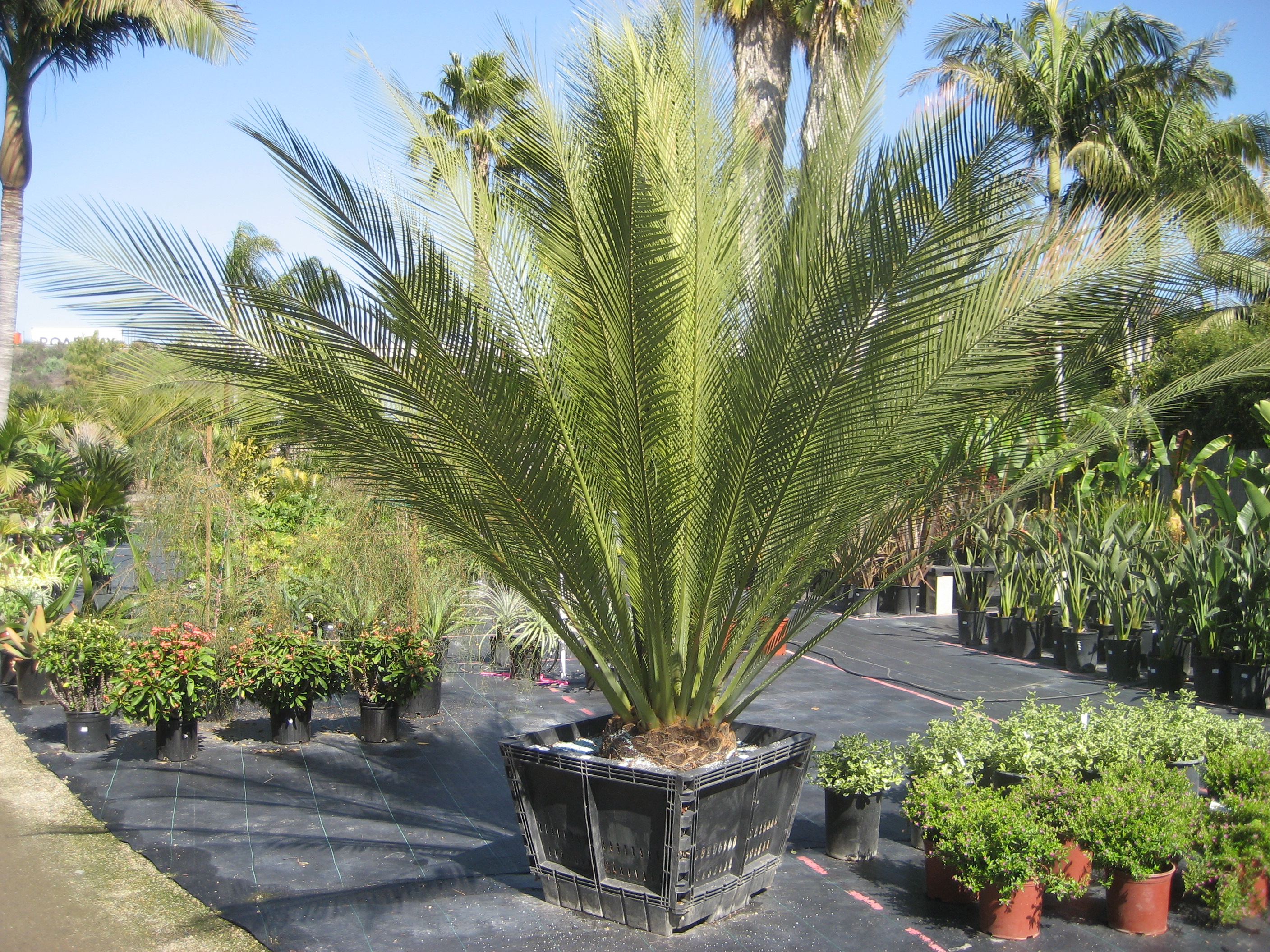
Macrozamia johnsonii
Photo: Wikimedia Commons (CC) via https://en.wikipedia.org/wiki/Macrozamia_johnsonii
Overview
Macrozamia johnsonii is a cycad, a slow-growing gymnosperm with a stout underground or partly emergent trunk and a crown of rigid, pinnate, dark-green leaves radiating outward. Like other cycads, it is dioecious, producing separate male and female plants that bear distinct cone structures for reproduction; female cones yield large seeds with a fleshy, often brightly coloured outer layer that attracts animals capable of dispersing them. As a long-lived understory component of its native forest, it contributes to soil stabilization and offers habitat structure for invertebrates and small fauna, while its seeds form part of the food resources available to local wildlife.
The species is endemic to eastern Australia, where it grows in subtropical and tropical moist lowland forest. Its distribution is naturally limited to specific forest patches, making it vulnerable to habitat disturbance within a relatively narrow geographic range.
Population numbers are declining, reflecting ongoing pressures from logging and wood harvesting, which degrade or remove the forest canopy and understory conditions the species depends on. Harvesting activity connected to fishing and aquatic resource use in adjacent areas has also been identified as a contributing threat, likely through associated habitat disturbance or access-related clearing near waterways and lowland forest margins.
Conservation attention for Macrozamia species generally includes habitat protection within reserves, restrictions on collection, and monitoring of wild populations, alongside broader forest management efforts aimed at reducing logging impacts in areas supporting cycad populations. Ex situ cultivation in botanical collections also serves as a safeguard for genetic material.
Given continued habitat pressure and its restricted range, Macrozamia johnsonii is assessed as Vulnerable, with a decreasing population trend. Its long-term outlook depends on effective enforcement of habitat protections and continued reduction of logging-related disturbance within its remaining forest range.
Macrozamia johnsonii is currently affected by ongoing tree cutting and timber removal from its habitat, as well as the collection or harvesting of plants, which may be linked to its use as an ornamental or collectible species. These activities can damage or reduce the areas where this plant naturally grows. Based on the available information, these threats appear to be ongoing and stable, rather than clearly increasing or decreasing.
Habitat
Conservation measures underway
Other threatened species in ZAMIACEAE
Threatened in Australia
Frequently asked questions
Why is Macrozamia johnsonii classified as Vulnerable?
Where does Macrozamia johnsonii live?
What are the main threats to Macrozamia johnsonii?
Get weekly conservation intelligence
One short digest a week of the most striking species and country data we ship, plus breaking conservation news paired with our database where it matters.
Free, no spam. One-click unsubscribe in every email.