Armoured Frog
Litoria lorica
Photo: Photo: Wikimedia Commons, CC BY-SA
Overview
Litoria lorica is a small stream-dwelling frog belonging to the family Pelodryadidae, distinguished by the granular, armour-like texture of skin on its back, which gives the species its common name. Like other members of its genus, it is closely tied to fast-flowing water, breeding in streams and relying on moist forest environments for shelter and foraging. As both predator of invertebrates and prey for larger vertebrates, it plays a modest but functional role in the food webs of the tropical rainforest streams it inhabits.
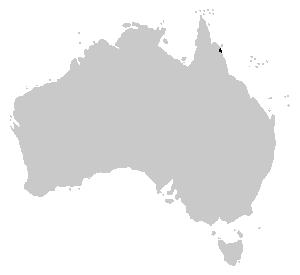
The species is restricted to a small area of upland rainforest in northeastern Australia, where it occupies subtropical and tropical forest types, including moist lowland forest and dry forest fringes, always in association with permanent rivers and streams.
Its Critically Endangered status stems primarily from chytrid fungus disease, which has caused severe population collapses in high-altitude stream-breeding frogs across the region. Compounding this are pressures from habitat alteration linked to logging, agricultural expansion, and residential development, as well as climate change, drought, and altered water quality from agricultural runoff. Native predators and competitors add further pressure to an already fragmented population.
Conservation attention has focused on monitoring surviving populations, disease research aimed at understanding chytrid resistance and transmission, and habitat protection within its limited range, much of which falls within protected forest areas in Queensland. Captive breeding and assurance colonies have been explored for related declining Litoria species as a hedge against extinction.
Despite the severity of past declines, the population trend is currently assessed as stable, suggesting that surviving populations may have reached a demographic equilibrium, possibly reflecting partial resistance or reduced exposure to chytrid fungus. However, its restricted range and ongoing environmental pressures mean its long-term security remains uncertain.
The Armoured Frog faces a deadly skin disease called chytrid fungus, which has caused severe declines in many frog species worldwide, along with other diseases and competition from non-native species introduced to its habitat. Its environment is also being degraded by logging, land clearing for farms and buildings, and pollution from runoff washing into its waterways, while droughts and shifting weather patterns linked to climate change add further pressure. All of these threats are currently ongoing and active, suggesting the situation remains serious with no signs of easing.
Habitat
This species inhabits rainforest streams and adjacent wet sclerophyll forests in northeastern Queensland, Australia. It requires clean, flowing water for breeding and relies on dense canopy cover and leaf litter for shelter and foraging.
Conservation measures underway
Other threatened species in PELODRYADIDAE

Threatened in Australia
Frequently asked questions
Why is Armoured Frog classified as Critically Endangered?
Where does Armoured Frog live?
What are the main threats to Armoured Frog?
Get weekly conservation intelligence
One short digest a week of the most striking species and country data we ship, plus breaking conservation news paired with our database where it matters.
Free, no spam. One-click unsubscribe in every email.