Centralian Floodplains Desert-skink
Liopholis slateri
Overview
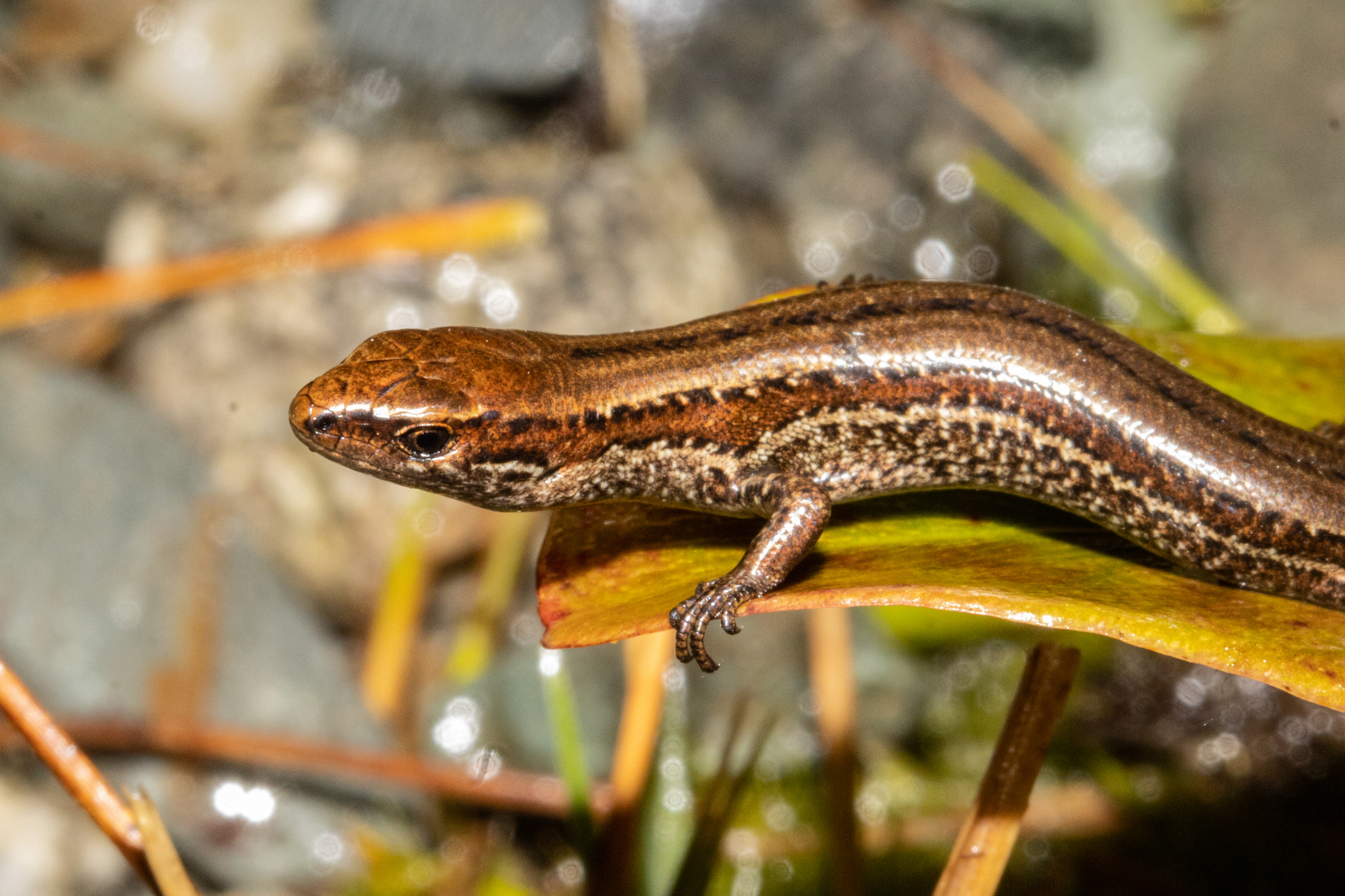
Liopholis slateri is a medium-sized burrowing skink with a robust body, smooth glossy scales, and a coloration ranging from reddish-brown to grey-brown, often marked with darker flecking along the back. Like other members of its genus, it is thought to construct and occupy long-term burrow systems, and it likely maintains complex social structures around these refuges, a behavior documented in related Liopholis species. As an insectivorous reptile, it contributes to invertebrate population control within its ecosystem and serves as prey for larger reptiles, birds, and mammals.
The species is restricted to arid central Australia, where it inhabits desert floodplain environments, typically associated with cracking clay soils and sparse vegetation near ephemeral watercourses. Its known range is fragmented and limited to a small number of locations within this desert habitat type.
Livestock grazing has degraded floodplain vegetation and destabilized burrow-supporting soils, while introduced predators, particularly foxes and cats, prey on both juveniles and adults. Altered fire regimes, including both frequent burning and fire suppression, have further modified habitat structure, reducing the ground cover and soil integrity the species depends on for shelter and foraging.
Conservation efforts include population surveys and monitoring across known sites, research into burrow ecology and habitat requirements, and control programs targeting introduced predators in parts of its range. Habitat protection measures within existing conservation reserves also contribute to safeguarding remaining populations.
The population is classified as decreasing, with ongoing pressure from grazing, predation, and fire management challenges. Without sustained management of these threats across its limited range, the species' long-term persistence remains uncertain.
This desert-dwelling skink faces ongoing pressure from cattle and other livestock grazing, which damages its burrows and habitat, along with competition and predation from introduced animals like feral cats and foxes. Frequent or poorly managed bushfires also destroy the vegetation it depends on for shelter and food. These threats are currently stable but persistent, continuing to affect the species without signs of significant increase or decrease.
Habitat
Conservation measures underway
Other threatened species in SCINCIDAE

Threatened in Australia
Frequently asked questions
Why is Centralian Floodplains Desert-skink classified as Vulnerable?
Where does Centralian Floodplains Desert-skink live?
What are the main threats to Centralian Floodplains Desert-skink?
Get weekly conservation intelligence
One short digest a week of the most striking species and country data we ship, plus breaking conservation news paired with our database where it matters.
Free, no spam. One-click unsubscribe in every email.