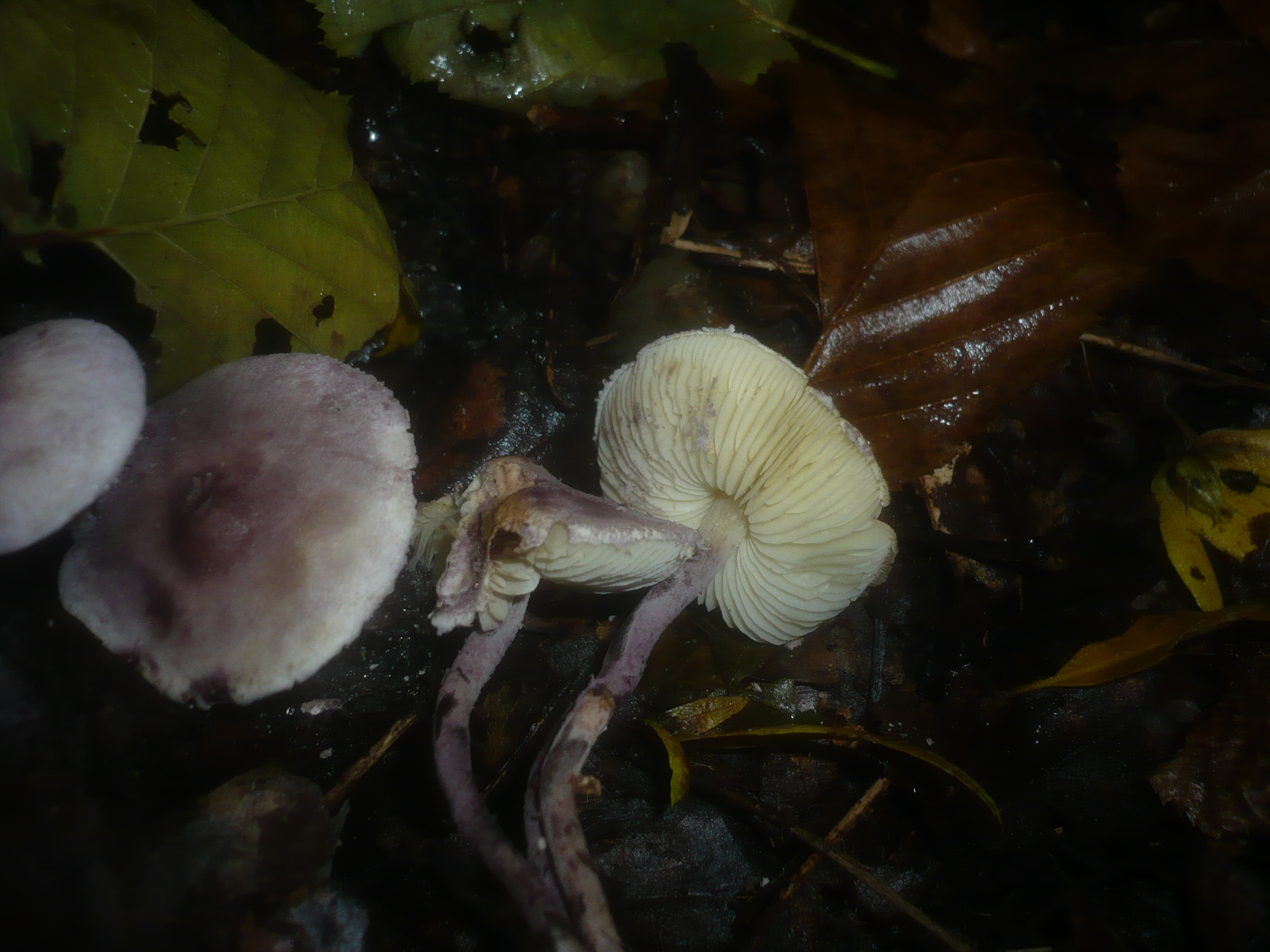
Lilac Dapperling
Cystolepiota bucknallii
Photo: Wikimedia Commons (CC) via https://en.wikipedia.org/wiki/Cystolepiota_bucknallii
Overview
Cystolepiota bucknallii is a species of basidiomycete fungus of the genus Cystolepiota. Found throughout Europe, it is a rare fungus occurring in deciduous forests. The small fruit bodies bear a distinctive smell of coal gas and appear in autumn on damp ground. It is not an edible mushroom.
The Lilac Dapperling faces severe population declines primarily due to habitat loss from agricultural expansion and urban development in its limited range. Climate change and pollution further threaten the specific soil and vegetation conditions this rare fungus requires for survival.
Habitat
C. bucknallii has been recorded in various countries in central and northern Europe including France, Belgium, Switzerland, Austria, Germany, Denmark, Norway, Sweden and Russia. It is a terrestrial decomposer which occurs in deciduous forests with moist, calcareous soils rich in nutrients and especially nitrogen. Fruit bodies appear in autumn.
Other threatened species in Agaricaceae


Frequently asked questions
Why is Lilac Dapperling classified as Endangered?
Where does Lilac Dapperling live?
What are the main threats to Lilac Dapperling?
Get weekly conservation intelligence
One short digest a week of the most striking species and country data we ship, plus breaking conservation news paired with our database where it matters.
Free, no spam. One-click unsubscribe in every email.