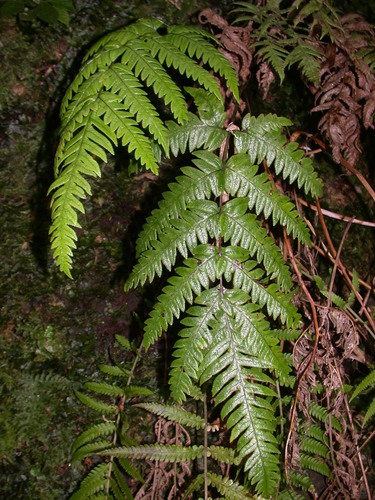
Lidgate's brake
Pteris lydgatei
Photo: Photo: (c) Kenneth R. Wood (NTBG), some rights reserved (CC BY-NC), uploaded by Kenneth R. Wood (NTBG)
Overview
Pteris lydgatei is a rare fern species in the Pteridoideae subfamily of the Pteridaceae. It is known by the common name Lydgate's brake and is endemic to Hawaii, where it is known from the islands of Oʻahu, Molokaʻi, and Maui. It was once thought to be extinct until it was rediscovered in the 1990s. There are fewer than 40 individuals in the wild. This is a federally listed endangered species of the United States.
Lidgate's brake is critically endangered due to severe habitat loss and degradation from invasive plant species, particularly in its native Hawaiian forest ecosystems. The species faces ongoing pressure from feral ungulates that damage its habitat and alter forest structure, while its extremely limited population size makes it vulnerable to stochastic events and genetic bottlenecks.
Other threatened species in Pteridaceae

Frequently asked questions
Why is Lidgate's brake classified as Critically Endangered?
Where does Lidgate's brake live?
What are the main threats to Lidgate's brake?
Get weekly conservation intelligence
One short digest a week of the most striking species and country data we ship, plus breaking conservation news paired with our database where it matters.
Free, no spam. One-click unsubscribe in every email.