
Lime-loving Tarpaper Lichen
Enchylium limosum
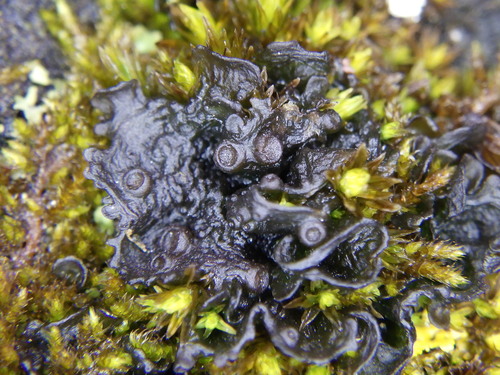
Photo: Wikimedia Commons (CC) via https://en.wikipedia.org/wiki/Enchylium_limosum
Overview
Enchylium limosum, commonly known as lime-loving tarpaper lichen, is a species of crustose to subfoliose lichen in the family Collemataceae. This unique lichen species possesses a gelatinous thallus with a dark coloration, contributing to its distinctive appearance. It thrives in a diverse array of habitats spanning temperate to boreal-montane regions, across Europe, North America, Africa, and Asia.
Enchylium limosum faces severe threats from habitat degradation due to pollution, eutrophication, and climate change affecting its specialized wetland environments. The species' restricted distribution and specific ecological requirements make it particularly vulnerable to environmental changes and human disturbances in freshwater and semi-aquatic ecosystems.
Habitat
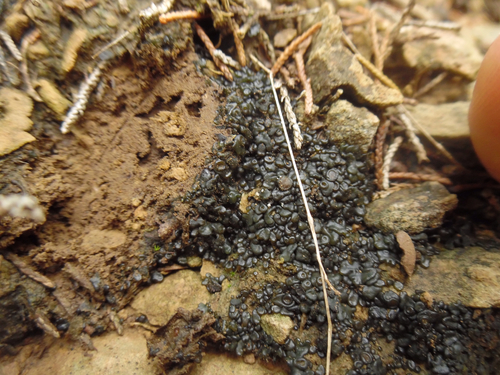
Enchylium limosum occurs in calcareous wetlands, muddy shores, and periodically flooded areas with high moisture content. This lichen species typically grows on soil and organic matter in alkaline conditions near freshwater bodies and temporary pools.
Other threatened species in Collemataceae
Frequently asked questions
Why is Lime-loving Tarpaper Lichen classified as Critically Endangered?
Where does Lime-loving Tarpaper Lichen live?
What are the main threats to Lime-loving Tarpaper Lichen?
Get weekly conservation intelligence
One short digest a week of the most striking species and country data we ship, plus breaking conservation news paired with our database where it matters.
Free, no spam. One-click unsubscribe in every email.