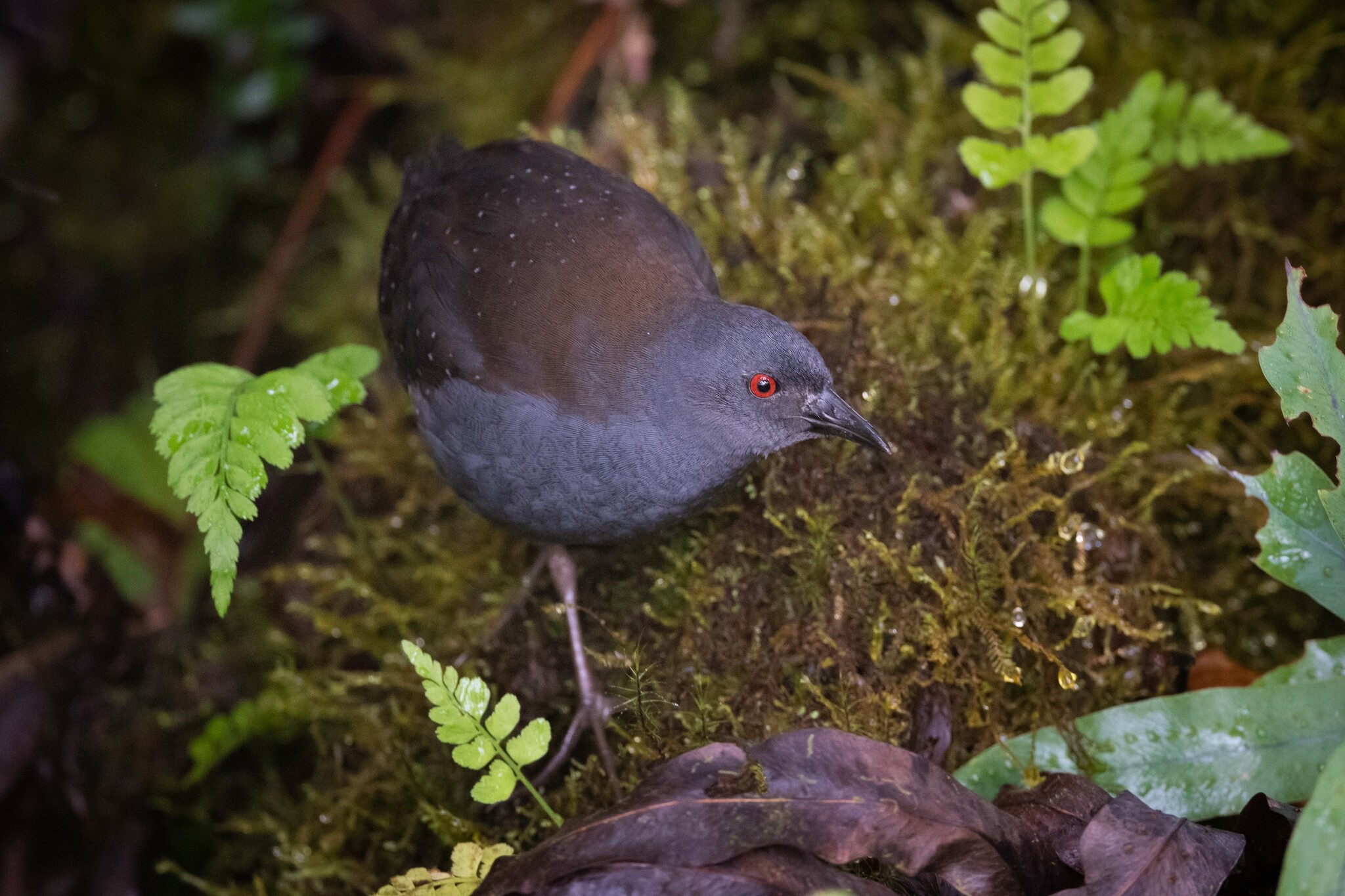
Galapagos Rail
Laterallus spilonota
Overview
A detailed profile for this species is sourced from the IUCN Red List of Threatened Species as assessments become available.
The Galápagos Rail faces severe pressure from introduced predators, particularly cats, rats, and pigs, which prey on eggs, chicks, and adults in their ground-nesting habitats. Habitat degradation from invasive plant species and trampling by introduced goats and cattle has reduced the quality of wetland and highland vegetation areas essential for foraging and nesting. Climate change poses an additional threat through altered precipitation patterns that could affect the seasonal wetlands this species depends upon.
Habitat
Conservation measures underway
Other threatened species in RALLIDAE

Threatened in Ecuador
Frequently asked questions
Why is Galapagos Rail classified as Vulnerable?
Where does Galapagos Rail live?
What are the main threats to Galapagos Rail?
Get weekly conservation intelligence
One short digest a week of the most striking species and country data we ship, plus breaking conservation news paired with our database where it matters.
Free, no spam. One-click unsubscribe in every email.