Lamarck's Sheet Coral
Agaricia lamarcki
Overview
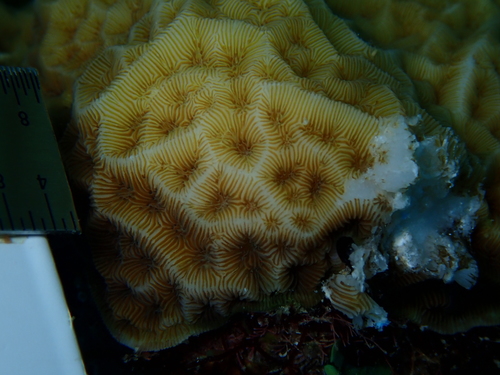
Lamarck's Sheet Coral (Agaricia lamarcki) is a reef-building coral found throughout the wider Caribbean, from Florida and the Bahamas south through the Antilles to the coasts of Central and South America. It forms distinctive thin, plate-like or sheet-shaped colonies that grow in overlapping, whorled layers, often tinted brown, tan, or grey-green, and is typically found on deeper reef slopes and walls at depths of 15 to over 60 meters, where its flattened morphology maximizes light capture in low-light conditions. This species is classified as Critically Endangered (CR) by the IUCN, with a decreasing population trend driven by cumulative reef degradation across its range.
Mass bleaching events linked to rising sea surface temperatures have caused significant colony mortality, while outbreaks of coral disease, particularly stony coral tissue loss disease and white plague, have devastated Caribbean reef communities including Agaricia populations. Ocean acidification further compromises skeletal growth and structural resilience, and localized pressures such as sedimentation, nutrient pollution, and coastal development continue to degrade the deeper reef habitats this species depends on. Because Agaricia lamarcki reproduces more slowly and recruits less readily than many shallow-water corals, recovery from disturbance events is particularly difficult.
Conservation efforts across the Caribbean include marine protected areas encompassing mesophotic reef zones, coral nurseries and restoration programs targeting resilient Agaricia genotypes, and regional monitoring networks tracking bleaching and disease spread to guide rapid-response interventions. Encouragingly, because this species often occupies deeper, cooler reef zones than shallow-water corals, some populations have shown relative thermal refuge during recent bleaching events, offering a potential source of resilient genetic stock for future restoration work. Continued research into its deeper-reef ecology may help identify natural refugia critical to the species' long-term survival.
Agaricia lamarcki faces severe population declines primarily due to coral bleaching events triggered by rising sea temperatures and ocean acidification. The species has experienced catastrophic mortality during mass bleaching episodes, with some populations showing over 90% decline since the 1980s. Disease outbreaks, particularly white plague and black band disease, have further decimated remaining colonies, while coastal development and sedimentation continue to degrade critical reef habitats.
Habitat
Agaricia lamarcki inhabits shallow coral reef environments in the Caribbean, typically found on reef slopes and walls at depths ranging from 5 to 40 meters. This plate coral species prefers areas with moderate to strong water flow and forms distinctive overlapping plate-like structures on vertical and overhanging surfaces.
Conservation measures underway
Other threatened species in AGARICIIDAE

Threatened in Bahamas


Frequently asked questions
Why is Lamarck's Sheet Coral classified as Critically Endangered?
Where does Lamarck's Sheet Coral live?
What are the main threats to Lamarck's Sheet Coral?
Get weekly conservation intelligence
One short digest a week of the most striking species and country data we ship, plus breaking conservation news paired with our database where it matters.
Free, no spam. One-click unsubscribe in every email.