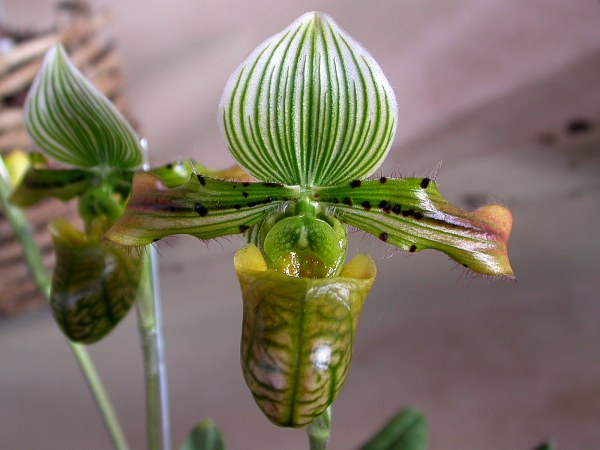
Laddy's Slipper Orchid
Paphiopedilum venustum
Photo: Wikimedia Commons (CC) via https://en.wikipedia.org/wiki/Paphiopedilum_venustum
Overview
Paphiopedilum venustum - Venus Slipper Orchid
Paphiopedilum venustum is a terrestrial orchid species distinguished by its characteristic slipper-shaped pouch and striking flowers. The blooms feature green and white striped petals with purple markings, typically measuring 8-10 cm across. As a terrestrial orchid, it grows in soil rather than as an epiphyte, playing a role in forest floor ecosystems through specialized mycorrhizal relationships with soil fungi.
This species occurs naturally across the Eastern Himalayas, including Bangladesh, northeastern India, Nepal, Bhutan, Myanmar, and southern China. It inhabits humid, shaded forest floors at elevations between 300-1,500 meters, preferring well-drained soils in deciduous and mixed forests. The presence in Western countries like Germany, Belgium, and the United Kingdom reflects cultivation rather than native populations.
The species faces significant pressure from logging and wood harvesting activities that destroy its forest habitat. Additionally, overcollection for the international horticultural trade poses an ongoing threat, as these orchids are highly prized by collectors for their distinctive appearance and rarity.
Conservation efforts include legal protection under CITES Appendix I, which restricts international trade. Several botanical gardens maintain ex-situ collections, and some range countries have established protected areas covering portions of its habitat. Artificial propagation techniques are being developed to reduce collection pressure on wild populations.
The species' outlook remains concerning, with continued habitat loss and collection pressure driving population declines. Without enhanced protection of remaining forest habitats and stricter enforcement of trade regulations, recovery prospects appear limited.
Paphiopedilum venustum, a rare orchid species, faces ongoing threats from logging and wood harvesting activities that destroy the forests where it grows. The species is also impacted by fishing and harvesting of aquatic resources, though the specific connection to this orchid's survival is unclear from the available data. Based on the current information, these threats appear to be continuing at stable levels rather than intensifying or decreasing.
Conservation measures underway
Other threatened species in ORCHIDACEAE
Threatened in Bangladesh



Frequently asked questions
Why is Laddy's Slipper Orchid classified as Endangered?
Where does Laddy's Slipper Orchid live?
What are the main threats to Laddy's Slipper Orchid?
Get weekly conservation intelligence
One short digest a week of the most striking species and country data we ship, plus breaking conservation news paired with our database where it matters.
Free, no spam. One-click unsubscribe in every email.