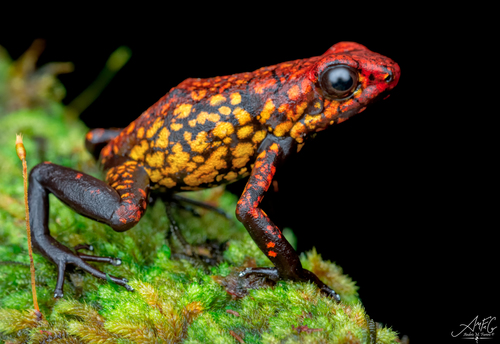
Oophaga occultator
Photo: (с) Andrés Mauricio Forero Cano, все права защищены, загрузил Andrés Mauricio Forero Cano
Overview
Oophaga occultator is a small, strikingly colored poison frog belonging to the Dendrobatidae family, native to the lowland and premontane forests of the Pacific coastal region of Colombia. Like other members of its genus, it displays vivid aposematic coloration, typically combinations of orange, red, or yellow patterning against darker body tones, which warns predators of the toxic alkaloid compounds sequestered in its skin from a diet of specialized arthropod prey. The species depends on structurally complex, humid forest understory habitat with abundant leaf litter and phytotelmata (water-holding plants such as bromeliads) where females deposit tadpoles to complete development, a reproductive strategy shared across Oophaga species that makes them especially sensitive to habitat degradation.
Oophaga occultator is classified as Critically Endangered (CR) by the IUCN, with a population trend that is currently decreasing. Its restricted geographic range along Colombia's Pacific coast, combined with the ongoing conversion of lowland rainforest for agriculture, logging, and infrastructure development, has placed severe pressure on remaining populations. The illegal pet trade poses an additional and significant risk, as brightly colored dendrobatids are highly sought after by international collectors, often resulting in unsustainable wild collection.
Conservation efforts in the region include habitat protection initiatives within Colombia's network of protected areas and growing collaboration between herpetological researchers and local communities to monitor remaining populations and curb illegal collection. Encouragingly, increased taxonomic and ecological research attention on Colombian Oophaga species in recent years has improved understanding of their distribution and threats, providing a stronger foundation for targeted conservation action and habitat corridor planning that could help stabilize remaining populations if sustained.
Oophaga occultator faces severe threats from habitat destruction due to deforestation, agricultural expansion, and urban development within its limited range in western Colombia. The species is particularly vulnerable due to its small population size, restricted distribution, and dependence on pristine forest conditions for breeding and survival.
Habitat
This species inhabits humid montane forests and cloud forests on the western slopes of the Cordillera Occidental in Colombia, typically at elevations between 1,200-2,000 meters. It requires pristine forest conditions with abundant leaf litter, fallen logs, and small water bodies for breeding.
Conservation measures underway
Other threatened species in DENDROBATIDAE

Threatened in Colombia
Frequently asked questions
Why is Oophaga occultator classified as Critically Endangered?
Where does Oophaga occultator live?
What are the main threats to Oophaga occultator?
Get weekly conservation intelligence
One short digest a week of the most striking species and country data we ship, plus breaking conservation news paired with our database where it matters.
Free, no spam. One-click unsubscribe in every email.