Kurnbudj Ctenotus
Ctenotus kurnbudj
Overview
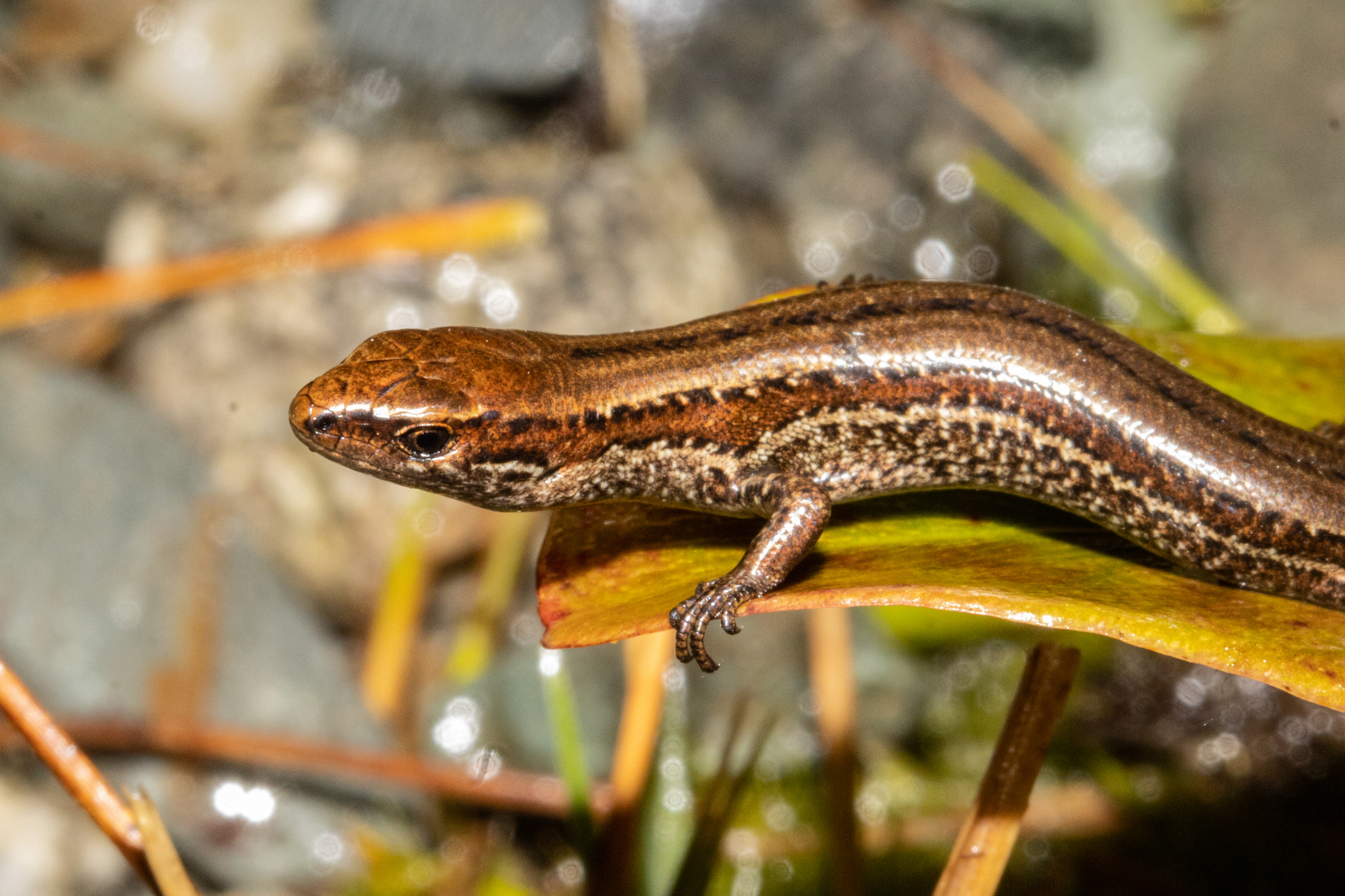
This small, agile skink is a member of the diverse genus Ctenotus, a group of Australian scincid lizards characterized by smooth, glossy scales and longitudinal stripe patterns along the body. Like other Ctenotus species, it is likely diurnal and terrestrial, foraging actively for invertebrates among leaf litter and vegetation, and relies on speed and cover to evade predators. As an insectivorous reptile, it likely plays a role in local food webs both as a predator of invertebrates and as prey for birds, larger reptiles, and mammals.
The species is restricted to Australia, where it inhabits forest environments and inland wetland margins. Its reliance on these two habitat types suggests a dependence on moist microhabitats and structurally complex vegetation for shelter, foraging, and thermoregulation.
The Kurnbudj Ctenotus is classified as Endangered, with an unknown population trend, meaning current abundance and trajectory cannot be reliably assessed. It faces several ongoing threats. Invasive species, including predators and potentially competing organisms, pose a persistent risk to its survival.
Altered fire regimes and fire suppression practices threaten to degrade or homogenize its forest and wetland habitats, reducing the structural diversity it may depend upon. Logging and wood harvesting further contribute to habitat loss and fragmentation, diminishing available shelter and foraging resources.
Specific conservation measures targeting this species are not well documented, though it likely benefits indirectly from broader habitat protection and invasive species control programs operating within its Australian range. Fire management strategies in forested and wetland ecosystems may also offer some protection if adapted to the species' ecological needs.
Given the combination of ongoing habitat pressures and unknown population trends, the species' long-term outlook remains uncertain, underscoring the need for targeted monitoring and research to clarify its conservation status.
The Kurnbudj Ctenotus faces ongoing pressure from invasive animals or diseases that harm native populations, along with damage to its habitat from wildfires and the way fires are managed in the landscape. Logging and the harvesting of timber also continue to disturb the areas where this lizard lives. All three threats are currently classified as ongoing, indicating a stable but persistent level of risk rather than a clear increase or decrease.
Habitat
Conservation measures underway
Other threatened species in SCINCIDAE

Threatened in Australia
Frequently asked questions
Why is Kurnbudj Ctenotus classified as Endangered?
Where does Kurnbudj Ctenotus live?
What are the main threats to Kurnbudj Ctenotus?
Get weekly conservation intelligence
One short digest a week of the most striking species and country data we ship, plus breaking conservation news paired with our database where it matters.
Free, no spam. One-click unsubscribe in every email.