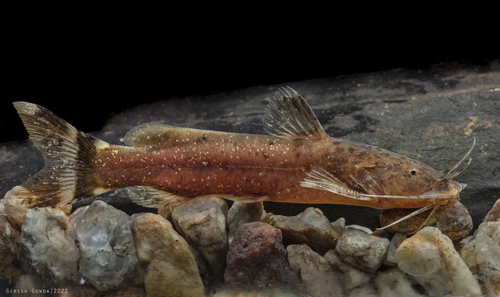
Glyptothorax kudremukhensis
Photo: (c) Girish Gowda, some rights reserved (CC BY-NC), uploaded by Girish Gowda
Overview
Glyptothorax kudremukhensis is a critically endangered freshwater catfish endemic to the Western Ghats of Karnataka, India. This small bottom-dwelling fish belongs to the family Sisoridae and is characterized by its flattened body and adhesive ventral surface that allows it to cling to rocks in fast-flowing streams. The species was first described from the Kudremukh region, from which it derives its name.
It inhabits clear, oxygen-rich mountain streams with rocky substrates at moderate to high elevations within the biodiversity hotspot of the Western Ghats. The fish's extremely limited distribution makes it particularly vulnerable to environmental changes and human activities. Primary threats include habitat degradation from mining activities, deforestation, agricultural runoff, and water pollution.
The Kudremukh region has experienced significant ecological pressure from iron ore mining operations, which have altered stream flow patterns and water quality. Additionally, land use changes in the catchment areas have increased sedimentation and reduced water clarity in the streams where this species occurs. Climate change poses an additional threat through potential alterations to rainfall patterns and stream temperatures.
Conservation efforts have been limited, though the establishment of Kudremukh National Park has provided some habitat protection. The species' conservation status highlights the urgent need for targeted research to better understand its ecology, population status, and specific habitat requirements. Effective conservation will require strict protection of remaining pristine stream habitats and restoration of degraded areas within its range.
This species faces severe threats from mining activities, deforestation, and agricultural pollution that degrade its mountain stream habitat. Water quality deterioration from sedimentation and chemical runoff poses significant risks to its survival. Climate change may further impact the species through altered rainfall patterns and stream temperatures.
Habitat
Glyptothorax kudremukhensis inhabits clear, fast-flowing mountain streams with rocky substrates in the Western Ghats of Karnataka. These oxygen-rich waters occur at moderate to high elevations within forested catchments of the Kudremukh region.
Conservation measures underway
Other threatened species in SISORIDAE
Threatened in India

Frequently asked questions
Why is Glyptothorax kudremukhensis classified as Critically Endangered?
Where does Glyptothorax kudremukhensis live?
What are the main threats to Glyptothorax kudremukhensis?
Get weekly conservation intelligence
One short digest a week of the most striking species and country data we ship, plus breaking conservation news paired with our database where it matters.
Free, no spam. One-click unsubscribe in every email.