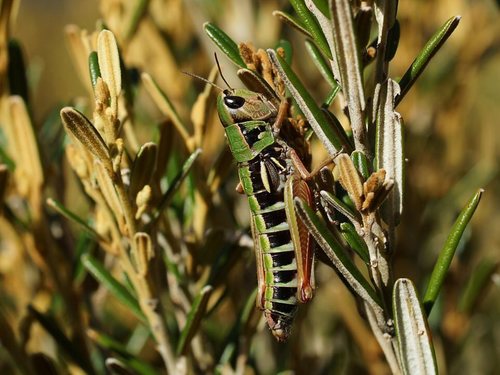
Mt. Buffalo Skyhopper
Kosciuscola restrictus
Photo: Photo: (c) Reiner Richter, some rights reserved (CC BY-NC-SA), uploaded by Reiner Richter
Overview
This flightless grasshopper belongs to the genus Kosciuscola, a group of alpine and subalpine acridids known for their distinctive thermal colour-change ability, shifting between dark and lighter hues as temperature fluctuates to regulate body heat. Like its relatives, it is likely a ground-dwelling herbivore, feeding on native grasses and low vegetation, and plays a role in high-elevation food webs as prey for birds and other insectivorous species. Its short wings and reliance on cool, montane conditions reflect an evolutionary specialisation to Australia's alpine and subalpine environments.
The species is restricted to the Mt. Buffalo region of Victoria, Australia, occupying forest, shrubland, and grassland habitats at elevation. This narrow geographic range makes it inherently vulnerable to localised environmental change, as there is little scope for range shifts or population redundancy elsewhere.
The species is classified as Critically Endangered, with a decreasing population trend. Key threats include invasive non-native species and diseases, which may alter habitat structure or introduce novel pressures, as well as introduced genetic material that could affect the integrity of local populations. Habitat shifting and alteration, likely linked to climate-driven changes in alpine vegetation zones, further reduce suitable habitat.
Altered fire regimes and fire suppression practices also affect the grassland and shrubland mosaics the species depends on.
Conservation attention for restricted-range alpine invertebrates in Australia typically involves habitat monitoring, control of invasive species, and management of fire regimes within protected areas such as national parks. Specific population-level interventions for this species are not well documented in available records.
Given its extremely limited range, ongoing habitat pressures, and ecological sensitivity to climate-linked change, the species' outlook remains poor, with continued population decline expected absent significant intervention.
The Mt. Buffalo Skyhopper faces ongoing dangers from invasive species and diseases that can outcompete or harm it, along with the introduction of non-native genetic material that may weaken its population through interbreeding. Its alpine habitat is also being altered as environmental conditions shift over time, while changing fire patterns and fire management practices pose additional risks to the areas where it lives. These threats appear to be ongoing and persistent rather than clearly worsening or improving based on the available information.
Habitat
Conservation measures underway
Other threatened species in ACRIDIDAE
Threatened in Australia
Frequently asked questions
Why is Mt. Buffalo Skyhopper classified as Critically Endangered?
Where does Mt. Buffalo Skyhopper live?
What are the main threats to Mt. Buffalo Skyhopper?
Get weekly conservation intelligence
One short digest a week of the most striking species and country data we ship, plus breaking conservation news paired with our database where it matters.
Free, no spam. One-click unsubscribe in every email.