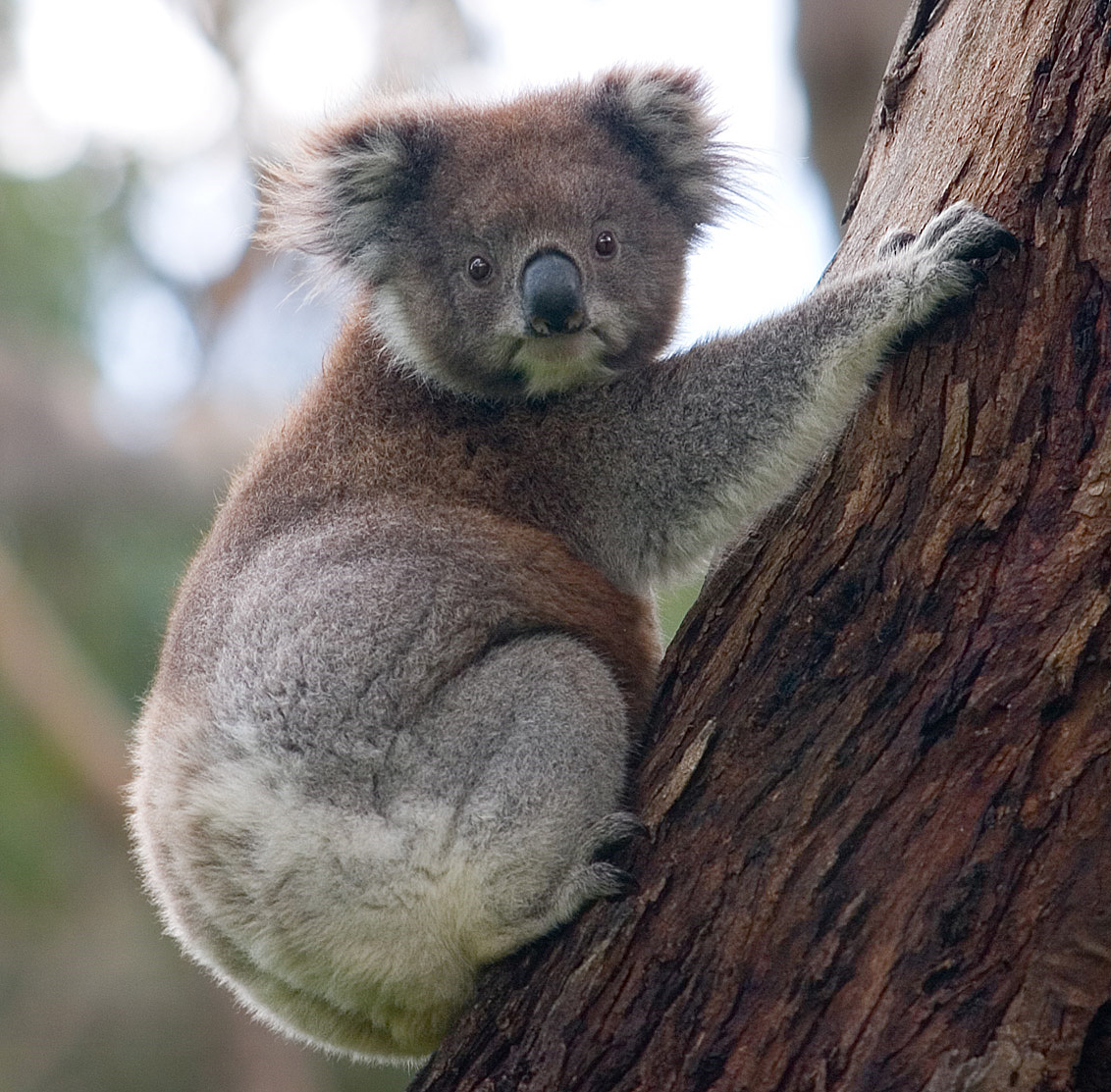
Koala
Phascolarctos cinereus
Photo: Wikimedia Commons (CC) via https://en.wikipedia.org/wiki/Koala
Overview
Phascolarctos cinereus is an arboreal marsupial recognized by its stocky body, large rounded ears, spoon-shaped nose, and thick grey-brown fur. Adults spend the majority of their time in eucalyptus trees, feeding almost exclusively on eucalypt leaves, which are low in nutritional value and require extended rest periods for digestion—up to 18–20 hours a day are spent sleeping or resting. As a specialist folivore, the species plays a role in shaping forest canopy structure and nutrient cycling within eucalypt woodlands, and its presence is often used as an indicator of forest ecosystem health.
The species is endemic to Australia, occurring along the eastern and southeastern regions of the continent, spanning Queensland, New South Wales, Victoria, and South Australia. It inhabits eucalypt-dominated forests and woodlands, with populations also recorded near inland wetlands, coastal areas, and semi-arid zones where suitable tree cover persists.
Population decline is driven by multiple compounding pressures. Disease, particularly chlamydia, causes significant morbidity and reproductive failure in many populations. Habitat alteration from land clearing and logging reduces available food trees and fragments populations, isolating them and limiting gene flow.
Increasingly frequent and severe droughts stress eucalypt food sources and increase animal vulnerability. Coastal and wetland habitat degradation further compounds range loss.
Conservation responses include habitat protection and replanting programs, wildlife corridors to reconnect fragmented populations, disease research and vaccine development, and rehabilitation of injured or displaced individuals following fire and drought events. Several states have implemented habitat protection legislation specific to the species.
Despite these measures, the overall population trend remains decreasing, and ongoing habitat loss and climate-related pressures suggest continued vulnerability without sustained, large-scale intervention.
Koalas face ongoing habitat loss as their forest homes are cleared or altered, worsened by logging for timber and increasingly severe droughts linked to climate change. They also suffer from disease, particularly illness spread within their own population, which weakens their ability to survive alongside these environmental pressures. Overall, these combined threats appear to be intensifying rather than stabilizing or decreasing.
Habitat
Conservation measures underway
Threatened in Australia
Frequently asked questions
Why is Koala classified as Vulnerable?
Where does Koala live?
What are the main threats to Koala?
Get weekly conservation intelligence
One short digest a week of the most striking species and country data we ship, plus breaking conservation news paired with our database where it matters.
Free, no spam. One-click unsubscribe in every email.