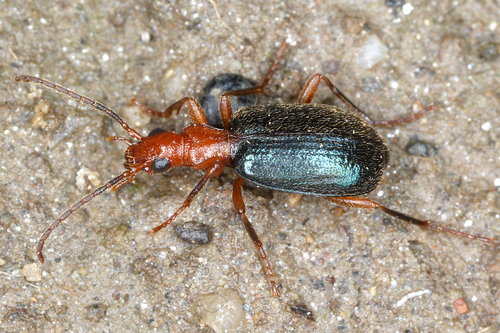
Brachinus explodens
Photo: Photo: (c) gernotkunz, all rights reserved, uploaded by gernotkunz
Overview
The kleine bombardeerkever (Brachinus explodens) is a small ground beetle distinguished by its distinctive chemical defense mechanism that produces explosive bursts of hot, caustic chemicals when threatened. This compact beetle features a dark metallic carapace with reddish-brown legs and antennae, typically measuring 8-12mm in length. As a predatory species, it plays a crucial role in controlling populations of small invertebrates in its ecosystem while serving as prey for larger arthropods and small vertebrates.
The kleine bombardeerkever faces severe population declines due to habitat destruction from agricultural intensification and urban development across its limited range. Climate change is altering the moisture and temperature conditions of its specialized microhabitats, while pollution from pesticides and industrial activities further degrades the soil ecosystems it depends upon.
Habitat
Inhabits moist soil environments including forest floor leaf litter, riparian zones along streams and rivers, and well-vegetated agricultural margins with organic-rich substrates. Requires stable moisture conditions and abundant prey populations in loose, well-aerated soils typically found in temperate deciduous and mixed forests.
Other threatened species in Carabidae


Frequently asked questions
Why is Brachinus explodens classified as Critically Endangered?
Where does Brachinus explodens live?
What are the main threats to Brachinus explodens?
Get weekly conservation intelligence
One short digest a week of the most striking species and country data we ship, plus breaking conservation news paired with our database where it matters.
Free, no spam. One-click unsubscribe in every email.