Kangaroo Island Shield-back
Nanodectes platycercus
Overview
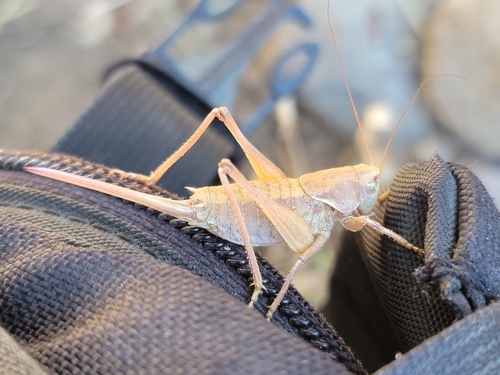
This shield-backed katydid is a member of the family Tettigoniidae, characterized by the robust, shield-like pronotum typical of its genus, which extends over part of the body and provides camouflage against predators. Like other tettigoniids, it is likely nocturnal, relying on cryptic coloration and stillness during the day to avoid detection, becoming active at night to feed on vegetation and possibly other invertebrates. As with many orthopterans, it likely plays a role in nutrient cycling and serves as a prey source for birds, reptiles, and small mammals within its ecosystem.
The species is endemic to Kangaroo Island, off the coast of South Australia, where it occupies shrubland habitats. Its restriction to a single island location makes it inherently vulnerable to environmental disturbances, as there is limited opportunity for population redistribution or genetic exchange with other populations.
The species is classified as Endangered, with a decreasing population trend. Bushfires and the fire suppression practices used to manage them have altered the structural composition of its shrubland habitat, while broader habitat shifting and alteration reduce the availability of suitable microhabitats. Ongoing droughts, likely intensified by regional climate patterns, place additional stress on vegetation the species depends upon, and logging and wood harvesting further fragment and degrade remaining habitat patches.
Conservation attention for Kangaroo Island invertebrates has increased following major fire events on the island, with habitat protection and restoration efforts underway in some shrubland areas. Monitoring of populations and habitat condition is likely part of broader island biodiversity assessments.
Given its restricted range and the ongoing, compounding nature of the threats it faces, the species' outlook remains precarious, with continued population decline anticipated absent significant habitat stabilization.
The Kangaroo Island Shield-back faces ongoing pressure from bushfires and the way land is managed to prevent them, which can destroy or degrade the vegetation it depends on. Its habitat is also being altered over time, and periods of drought are reducing the moisture and plant cover it needs to survive, while tree removal for timber further strips away shelter and habitat. These threats are ongoing and show no signs of easing, meaning the pressures on this species remain steady rather than improving.
Habitat
Conservation measures underway
Other threatened species in TETTIGONIIDAE
Threatened in Australia
Frequently asked questions
Why is Kangaroo Island Shield-back classified as Endangered?
Where does Kangaroo Island Shield-back live?
What are the main threats to Kangaroo Island Shield-back?
Get weekly conservation intelligence
One short digest a week of the most striking species and country data we ship, plus breaking conservation news paired with our database where it matters.
Free, no spam. One-click unsubscribe in every email.