Kangaroo Island Requena
Requena kangaroo
Overview
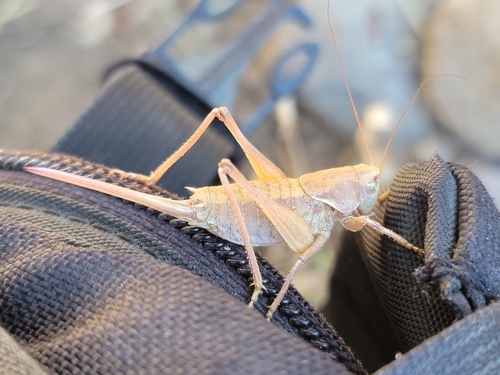
Requena kangaroo is a large, flightless katydid within the family Tettigoniidae, distinguished by its robust body, long antennae, and powerful hind legs adapted for jumping rather than sustained flight. Like other tettigoniids, it is primarily nocturnal, relying on camouflage and stridulation for communication and mate attraction. As an invertebrate herbivore/omnivore typical of its family, it likely contributes to nutrient cycling and serves as a prey item for birds, reptiles, and small mammals within its ecosystem, though detailed behavioural studies specific to this species remain limited.
The species is restricted to Kangaroo Island, off the coast of South Australia, occupying terrestrial habitats alongside marine coastal/supratidal and marine neritic zones, suggesting a reliance on coastal vegetation communities and associated microhabitats near the shoreline.
Its endangered status stems largely from two compounding pressures: prolonged drought conditions that degrade vegetation structure and moisture-dependent microhabitats essential for survival, and fire, including both wildfire events and the cumulative effects of fire suppression practices that alter habitat composition. Kangaroo Island's exposure to severe bushfire seasons has placed direct pressure on remaining populations and their limited range.
Conservation attention has increased following major fire events on Kangaroo Island, with habitat protection and monitoring efforts forming part of broader island-wide biodiversity recovery programs targeting fire-affected endemic species. Population size and trend data remain unknown, limiting precise assessment of recovery progress.
Given its narrow geographic range, specialised habitat associations, and exposure to recurring climate-linked threats, the species' outlook remains uncertain. Continued monitoring and habitat protection will be critical to determining whether current conservation measures are sufficient to stabilise remaining populations.
Kangaroo Island Requena faces two ongoing threats: prolonged dry periods that reduce moisture and food availability in its habitat, and fires along with the challenges of managing fire risk in the landscape it depends on. These pressures are ongoing rather than easing, suggesting the threats remain steady rather than improving.
Habitat
Conservation measures underway
Other threatened species in TETTIGONIIDAE
Threatened in Australia
Frequently asked questions
Why is Kangaroo Island Requena classified as Endangered?
Where does Kangaroo Island Requena live?
What are the main threats to Kangaroo Island Requena?
Get weekly conservation intelligence
One short digest a week of the most striking species and country data we ship, plus breaking conservation news paired with our database where it matters.
Free, no spam. One-click unsubscribe in every email.