Kangaroo Island Marauding Katydid
Metaballus mesopterus
Overview
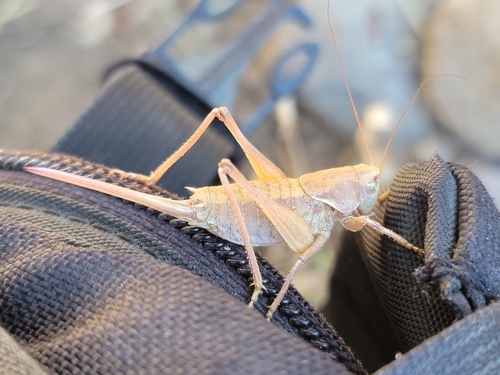
Metaballus mesopterus is a katydid in the family Tettigoniidae, restricted to Kangaroo Island off the coast of South Australia. Like other tettigoniids, it possesses elongated hind legs adapted for jumping, long thread-like antennae, and cryptic green or brown colouration that provides camouflage among vegetation. Males produce calling songs through stridulation to attract mates, a behaviour typical of the family.
As a herbivorous and occasionally omnivorous insect, it likely contributes to nutrient cycling and serves as prey for birds, reptiles, and other invertebrate predators within its ecosystem.
The species occupies temperate forest, shrubland, and areas bordering permanent inland rivers and streams on Kangaroo Island, indicating a preference for moist, vegetated habitats with structural complexity for shelter and foraging.
The katydid faces several ongoing threats. Fire and altered fire regimes, including suppression practices that change vegetation structure, pose a significant risk, particularly given the catastrophic bushfires that have affected large portions of Kangaroo Island's native habitat in recent years. Invasive species, including predators and competitors, threaten population stability.
Habitat alteration from land-use change and the expansion of annual and perennial non-timber crop agriculture further fragment and degrade suitable habitat.
Conservation attention on Kangaroo Island has increasingly focused on post-fire habitat recovery and invasive species control, which indirectly benefit remaining populations of native invertebrates including this katydid, though species-specific management programs are limited.
Population trends are decreasing, and the species is currently listed as Endangered. Continued habitat loss, fire frequency, and agricultural pressure suggest an unfavourable trajectory unless targeted habitat protection and restoration measures are strengthened on the island.
This species faces ongoing risks from bushfires and the fire management practices used to control them, as well as pressure from invasive species that may compete with or prey on it. Its habitat is also being altered over time, including conversion of land for growing annual and perennial crops, which reduces the natural areas it depends on. Since all these threats are currently classified as ongoing, the overall pressure on the species appears to be stable rather than clearly increasing or decreasing.
Habitat
Conservation measures underway
Other threatened species in TETTIGONIIDAE
Threatened in Australia
Frequently asked questions
Why is Kangaroo Island Marauding Katydid classified as Endangered?
Where does Kangaroo Island Marauding Katydid live?
What are the main threats to Kangaroo Island Marauding Katydid?
Get weekly conservation intelligence
One short digest a week of the most striking species and country data we ship, plus breaking conservation news paired with our database where it matters.
Free, no spam. One-click unsubscribe in every email.