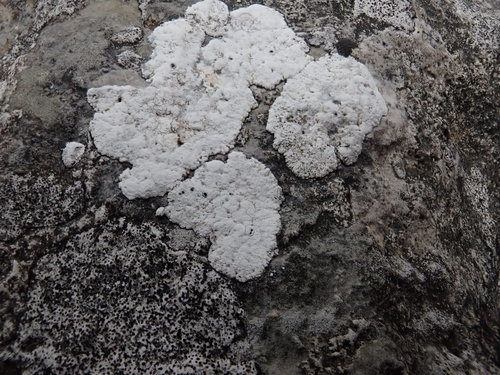
map lichen
Rhizocarpon umbilicatum
Photo: Photo: (c) Paul Bowyer, some rights reserved (CC BY-NC), uploaded by Paul Bowyer
Overview
Kalk-landkortlav (Rhizocarpon umbilicatum) is a crustose lichen species that forms distinctive yellowish-green to gray crusty patches on rock surfaces. This slow-growing lichen plays a crucial ecological role in primary succession, helping to break down rock substrates and create soil conditions for other organisms to establish.
Rhizocarpon umbilicatum, a crustose lichen species, faces severe decline primarily due to habitat loss and degradation of its specialized calcareous rock substrates. Air pollution, particularly nitrogen deposition and acid rain, significantly impacts this pollution-sensitive species by altering the chemical composition of its rocky habitat and disrupting its symbiotic relationship.
Habitat
Rhizocarpon umbilicatum grows exclusively on calcareous rocks and limestone outcrops in exposed, well-lit environments. The species typically colonizes stable rock faces, boulder fields, and cliff surfaces where it can access direct sunlight while remaining protected from excessive moisture accumulation.
Other threatened species in Rhizocarpaceae

Frequently asked questions
Why is map lichen classified as Critically Endangered?
Where does map lichen live?
What are the main threats to map lichen?
Get weekly conservation intelligence
One short digest a week of the most striking species and country data we ship, plus breaking conservation news paired with our database where it matters.
Free, no spam. One-click unsubscribe in every email.