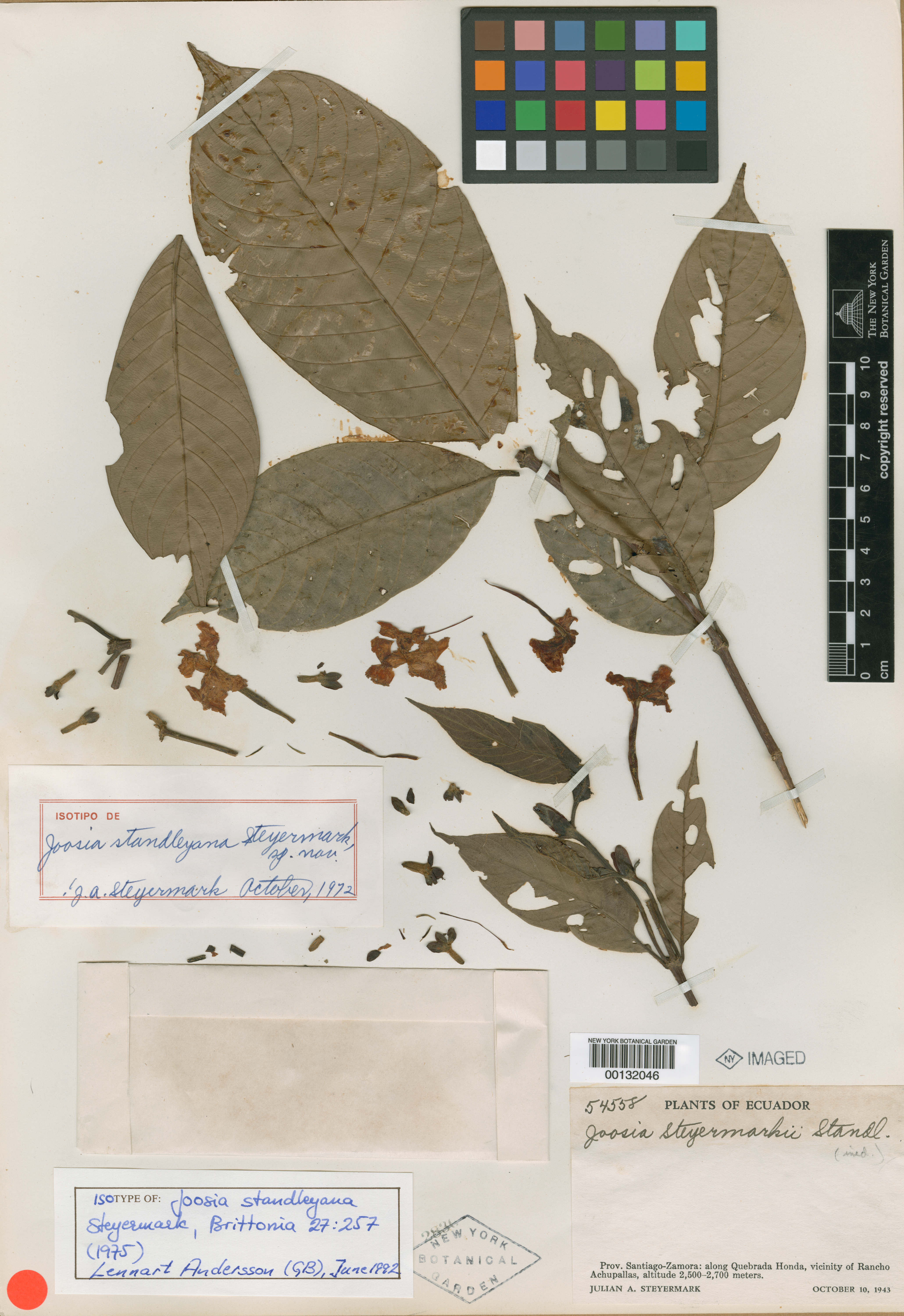
Joosia standleyana
Photo: Wikimedia Commons (CC) via https://en.wikipedia.org/wiki/Joosia_standleyana
Overview
A detailed profile for this species is sourced from the IUCN Red List of Threatened Species as assessments become available.
Joosia standleyana faces significant pressure from deforestation and habitat fragmentation across its limited range in Central American cloud forests. Agricultural expansion, particularly coffee cultivation and cattle ranching, continues to reduce available habitat. The species' restricted elevational range makes it particularly vulnerable to climate change impacts, as warming temperatures force suitable habitat upslope with nowhere to retreat.
Habitat
This species inhabits montane cloud forests and humid premontane forests at elevations between 1,200-2,400 meters. It typically occurs in primary and well-developed secondary forests with dense canopy cover and high humidity levels characteristic of cloud forest ecosystems.
Other threatened species in RUBIACEAE
Threatened in Ecuador
Frequently asked questions
Why is Joosia standleyana classified as Vulnerable?
Where does Joosia standleyana live?
What are the main threats to Joosia standleyana?
Get weekly conservation intelligence
One short digest a week of the most striking species and country data we ship, plus breaking conservation news paired with our database where it matters.
Free, no spam. One-click unsubscribe in every email.