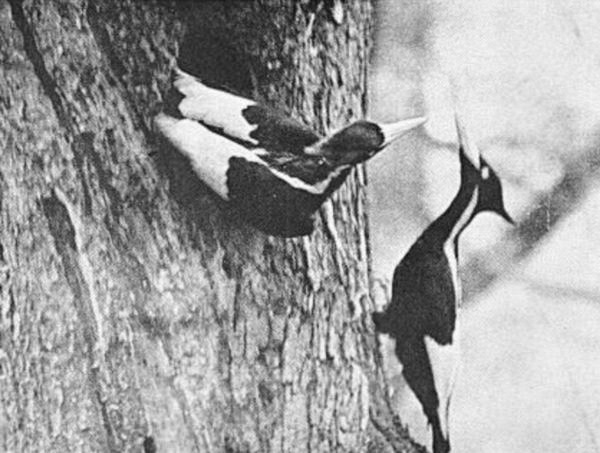
Ivory-billed Woodpecker
Campephilus principalis
Photo: Wikimedia Commons (CC) via https://en.wikipedia.org/wiki/Ivory-billed_woodpecker
Overview
A detailed profile for this species is sourced from the IUCN Red List of Threatened Species as assessments become available.
The Ivory-billed Woodpecker's decline stems primarily from extensive logging of old-growth bottomland hardwood forests throughout the southeastern United States during the 19th and early 20th centuries. The species requires large territories of mature forest with abundant dead and dying trees for foraging, habitat that was systematically cleared for agriculture and timber. Additional pressures included specimen collecting during the early 1900s when the species was already rare, and potential competition from Pileated Woodpeckers in degraded habitats.
Habitat
The Ivory-billed Woodpecker historically inhabited extensive old-growth bottomland hardwood forests and mature swamp forests of the southeastern United States and Cuba. These ecosystems featured large tracts of ancient bald cypress, tupelo, oak, and sweet gum trees with abundant dead wood for beetle larvae foraging.
Conservation measures underway
Other threatened species in PICIDAE
Threatened in Cuba

Frequently asked questions
Why is Ivory-billed Woodpecker classified as Critically Endangered?
Where does Ivory-billed Woodpecker live?
What are the main threats to Ivory-billed Woodpecker?
Get weekly conservation intelligence
One short digest a week of the most striking species and country data we ship, plus breaking conservation news paired with our database where it matters.
Free, no spam. One-click unsubscribe in every email.