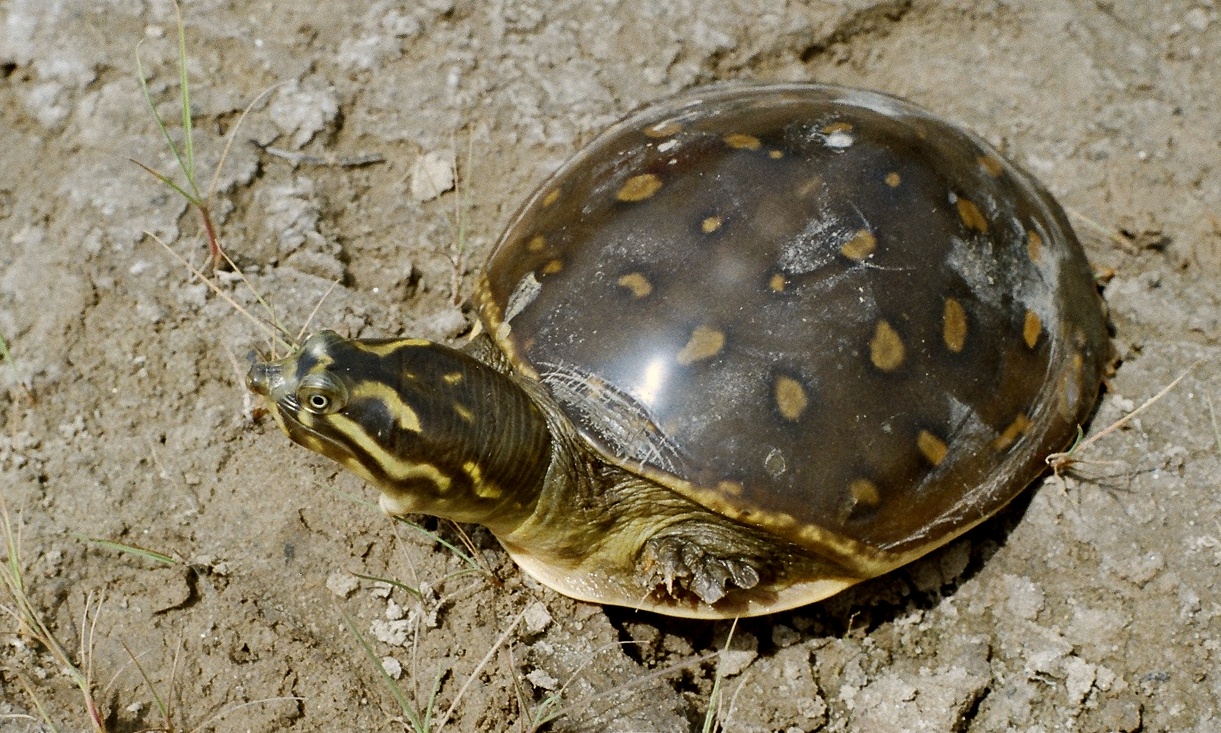
Indian Flapshell Turtle
Lissemys punctata
Photo: Wikimedia Commons (CC) via https://en.wikipedia.org/wiki/Indian_flapshell_turtle
Overview
The Indian flapshell turtle is a medium-sized freshwater turtle characterized by its distinctive soft, leathery shell and moveable flaps of skin that can partially cover its limbs when retracted. Adults typically measure 15-35 cm in shell length, with females generally larger than males. The carapace is olive to dark brown with yellow spots, while the plastron is yellowish.
These turtles are omnivorous, feeding on aquatic vegetation, fish, frogs, insects, and carrion, playing an important role as both predator and scavenger in freshwater ecosystems.
This species inhabits permanent rivers, streams, ponds, and wetlands across the Indian subcontinent, including India, Pakistan, Bangladesh, Nepal, and Myanmar. They prefer slow-moving or still waters with muddy bottoms where they can burrow during dry periods or winter months.
The Indian flapshell turtle faces multiple threats contributing to its vulnerable status. Urban development destroys critical wetland habitats, while dam construction fragments river systems and alters water flow patterns. Intensive harvesting for local consumption and traditional medicine markets poses significant pressure on wild populations. Additionally, incidental capture in fishing operations contributes to mortality rates.
Conservation efforts include habitat protection in some protected areas and captive breeding programs in several range countries. Some states in India have implemented harvesting restrictions, though enforcement remains challenging.
The species' outlook remains concerning, with populations continuing to decline across most of its range. Without strengthened protection measures and habitat conservation, this turtle faces increasing risk of local extinctions throughout its native range.
The Indian flapshell turtle faces multiple ongoing threats including the expansion of cities and towns into their habitat, the construction of dams and water diversions that alter their aquatic homes, and people actively hunting and trapping them for food or trade. They are also caught accidentally during fishing operations and other wildlife hunting activities in the areas where they live. All of these threats are currently ongoing with no clear indication that they are decreasing.
Habitat
Conservation measures underway
Other threatened species in TRIONYCHIDAE

Threatened in Bangladesh



Frequently asked questions
Why is Indian Flapshell Turtle classified as Vulnerable?
Where does Indian Flapshell Turtle live?
What are the main threats to Indian Flapshell Turtle?
Get weekly conservation intelligence
One short digest a week of the most striking species and country data we ship, plus breaking conservation news paired with our database where it matters.
Free, no spam. One-click unsubscribe in every email.