Imperiled Grass False Shieldback
Paracilacris periclitatus
Overview
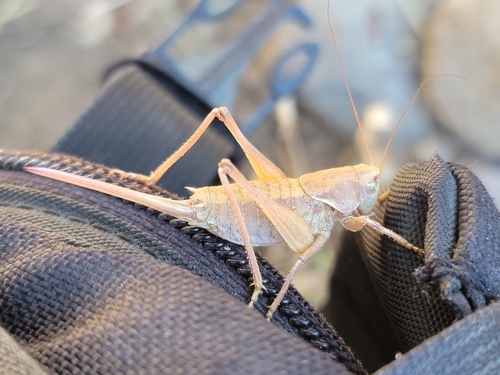
The Imperiled Grass False Shieldback (Paracilacris periclitatus) is a katydid-like orthopteran species classified as Critically Endangered (CR) by the IUCN. Like other false shieldbacks in its genus, it is characterized by a robust, wingless or short-winged body, a shield-shaped pronotum extending over the thorax, and cryptic green or brown coloration that provides camouflage within dense grass and low vegetation. This species inhabits specialized grassland ecosystems, where it relies on native grass species for both shelter and food, and its restricted range makes it especially vulnerable to localized disturbance.
Population trend data remain unknown, reflecting the scarcity of long-term monitoring for small-bodied, range-restricted insects, but its Critically Endangered status signals severe and ongoing pressure on remaining populations. Habitat degradation from agricultural conversion, livestock grazing, and encroaching development are believed to be central drivers of decline, compounded by the species' narrow ecological tolerances and limited dispersal ability. Fragmentation of remaining grassland patches likely isolates subpopulations, reducing genetic exchange and heightening extinction risk from stochastic events such as drought or fire.
Conservation attention for grassland-dependent invertebrates like this shieldback has been historically limited compared to vertebrates, but growing recognition of insect decline as a global conservation priority has begun to shift research and funding toward habitat protection measures that could benefit this species indirectly. Efforts to conserve and restore native grassland habitats in the species' known range offer a genuine opportunity to stabilize remaining populations if implemented with targeted surveys and habitat management. Continued taxonomic and ecological research is needed to clarify population size, distribution, and specific threats, but the species' persistence to date, despite significant habitat pressure, suggests some resilience that targeted conservation action could reinforce.
Paracilacris periclitatus faces severe threats from habitat destruction due to agricultural expansion and urban development within its restricted range. The species' extremely limited distribution makes it particularly vulnerable to localized environmental changes and human activities. Overgrazing by livestock has degraded the native grassland habitats essential for this grasshopper's survival, while climate change may be altering the specific microhabitat conditions it requires.
Habitat
This critically endangered grasshopper inhabits specialized native grassland ecosystems with specific vegetation requirements. It appears to depend on particular grass species and microhabitat conditions that are increasingly rare due to land conversion and degradation.
Other threatened species in TETTIGONIIDAE
Threatened in South Africa


Frequently asked questions
Why is Imperiled Grass False Shieldback classified as Critically Endangered?
Where does Imperiled Grass False Shieldback live?
What are the main threats to Imperiled Grass False Shieldback?
Get weekly conservation intelligence
One short digest a week of the most striking species and country data we ship, plus breaking conservation news paired with our database where it matters.
Free, no spam. One-click unsubscribe in every email.