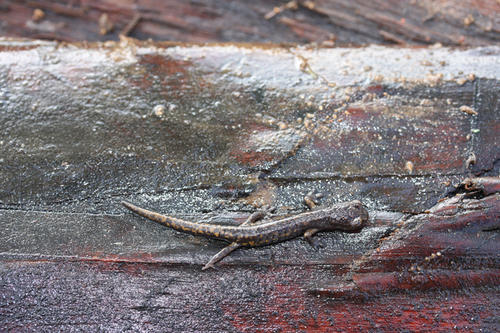
Imperial Salamander
Pseudoeurycea ahuitzotl
Photo: (c) 2011 Sean Michael Rovito, some rights reserved (CC BY-NC-SA)
Overview
Pseudoeurycea ahuitzotl, commonly known as the imperial salamander, is a species of salamander in the family Plethodontidae. It is endemic to Mexico and only known from its type locality, Cerro Teotepec in Guerrero, at about 2,000 m (6,600 ft) asl. It is known from open fir-pine-oak forest with bunchgrass. It seems to require fallen logs for hiding at the daytime.
Pseudoeurycea ahuitzotl faces severe threats from habitat destruction due to urban expansion and agricultural conversion in the mountains surrounding Mexico City. The species' extremely limited range makes it particularly vulnerable to local environmental changes, while pollution from nearby urban areas degrades water quality in the streams it depends upon. Climate change poses an additional threat by altering temperature and precipitation patterns in its high-altitude habitat.
Habitat
This salamander inhabits cool, moist montane forests at elevations between 2,400-3,000 meters in the mountains near Mexico City. It is typically found in or near streams, springs, and seepages within pine-oak forests where it shelters under rocks, logs, and leaf litter.
Conservation measures underway
Other threatened species in PLETHODONTIDAE


Threatened in Mexico
Frequently asked questions
Why is Imperial Salamander classified as Critically Endangered?
Where does Imperial Salamander live?
What are the main threats to Imperial Salamander?
Get weekly conservation intelligence
One short digest a week of the most striking species and country data we ship, plus breaking conservation news paired with our database where it matters.
Free, no spam. One-click unsubscribe in every email.