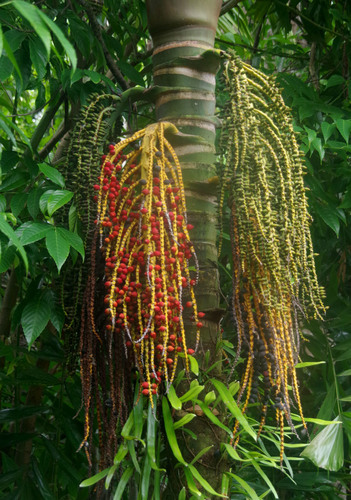
Howea forsteriana
Overview
A detailed profile for this species is sourced from the IUCN Red List of Threatened Species as assessments become available.
Howea forsteriana faces significant pressure from over-collection for the international horticultural trade, where it is highly prized as an ornamental palm. The species' extremely restricted range on Lord Howe Island makes it vulnerable to habitat degradation from invasive plant species and potential climate change impacts. Seed harvesting for commercial propagation, while regulated, continues to impact natural regeneration rates in wild populations.
Habitat
Endemic to Lord Howe Island, this palm inhabits lowland forests and coastal areas, typically growing in volcanic soils in sheltered valleys and on lower mountain slopes. It thrives in the island's subtropical climate with high humidity and regular rainfall.
Conservation measures underway
Other threatened species in ARECACEAE
Frequently asked questions
Why is Howea forsteriana classified as Vulnerable?
Where does Howea forsteriana live?
What are the main threats to Howea forsteriana?
Get weekly conservation intelligence
One short digest a week of the most striking species and country data we ship, plus breaking conservation news paired with our database where it matters.
Free, no spam. One-click unsubscribe in every email.