
hora
Dipterocarpus zeylanicus
Photo: Wikimedia Commons (CC) via https://en.wikipedia.org/wiki/Dipterocarpus_zeylanicus
Overview
Dipterocarpus zeylanicus, commonly known as හොර - Hora in Sinhalese and සරල - Sarala or කිරිපලු - Kiripalu, is a species of Dipterocarpus that is endemic to Sri Lanka. A closely related Indian species is Dipterocarpus turbinatus. The Sri Lankan tree is a large tree that grows up to 40–45 m (131–148 ft) tall and 4–6 m (13–20 ft) in circumference.
The bark is light pinkish brown or light yellowish brown. Leaves are big and oval, 5 to 8 inches long. The sharp-edged leaves are covered with silver hairs.
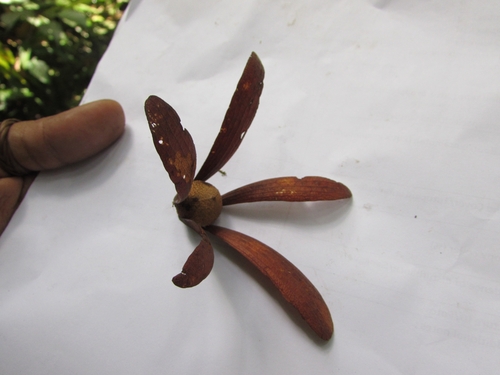
Flowers bloom in April and seeds have two wings to spread from wind. The bark contains considerable amounts of gray colour oleoresin. D.
zeylanicus can be found in moist low country like Ratnapura, Kaluthara, Galle and Matara Districts and also in the Sinharaja rain forest. The tallest trees...
Dipterocarpus zeylanicus faces severe population decline primarily due to extensive deforestation and habitat conversion for agriculture, urban development, and logging activities across its native range in Sri Lanka. The species' limited distribution and slow growth rate make it particularly vulnerable to ongoing habitat fragmentation and degradation.
Other threatened species in Dipterocarpaceae

Threatened in French Polynesia
Frequently asked questions
Why is hora classified as Endangered?
Where does hora live?
What are the main threats to hora?
Get weekly conservation intelligence
One short digest a week of the most striking species and country data we ship, plus breaking conservation news paired with our database where it matters.
Free, no spam. One-click unsubscribe in every email.