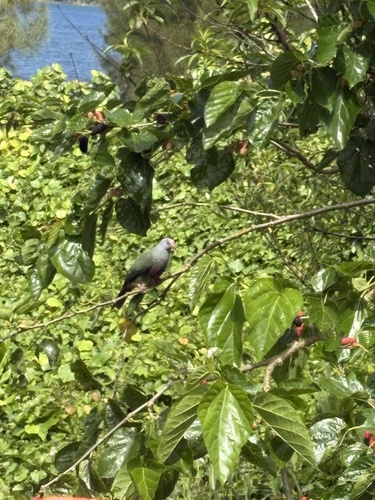
Rapa Fruit-dove
Ptilinopus huttoni
Photo: (c) olivier_esnault, nogle rettigheder forbeholdes (CC BY-NC)
Overview
The Rapa fruit dove is a species of bird in the family Columbidae, which includes pigeons and doves. It is endemic to the island of Rapa Iti in French Polynesia. The species was classified as Critically Endangered by the IUCN Red List in 2018 because of its small population and predicted continued decline.
The Rapa fruit dove primarily feeds on fleshy fruit. Its natural habitat is subtropical or tropical moist lowland forests and it has an extent of 30 square kilometres (12 sq mi). It is threatened by habitat loss due to deforestation and invasive species.
Effective land protection and management could increase the quality of habitat for the species. Additional research into population dynamics and the impact of threats to the species can give a better understanding of the conservation practices needed.
Ptilinopus huttoni faces severe population decline primarily due to habitat destruction from logging and agricultural expansion across its limited range in Fiji. Introduced predators, particularly cats and rats, pose significant threats to nesting birds and their eggs. The species' restricted distribution makes it extremely vulnerable to any environmental changes, with cyclones and extreme weather events potentially devastating the remaining small population.
Habitat
This fruit dove inhabits mature tropical rainforest canopies and forest edges in Fiji's mountainous regions. It shows preference for areas with abundant fruiting trees, particularly native figs and other forest fruits that comprise its primary diet.
Conservation measures underway
Other threatened species in COLUMBIDAE
Threatened in French Polynesia
Frequently asked questions
Why is Rapa Fruit-dove classified as Critically Endangered?
Where does Rapa Fruit-dove live?
What are the main threats to Rapa Fruit-dove?
Get weekly conservation intelligence
One short digest a week of the most striking species and country data we ship, plus breaking conservation news paired with our database where it matters.
Free, no spam. One-click unsubscribe in every email.