
Hemisaga vepreculae
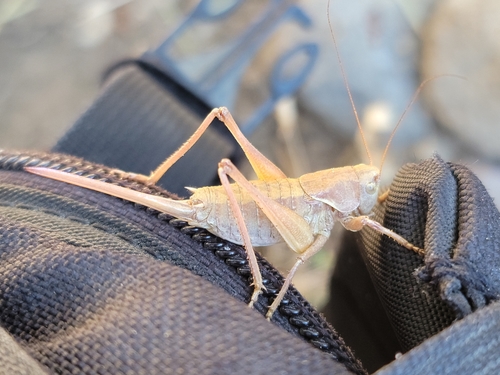
Photo: Wikimedia Commons (CC) via https://en.wikipedia.org/wiki/Hemisaga_vepreculae
Overview
Hemisaga vepreculae is a large, flightless katydid within the family Tettigoniidae, characterized by the robust body, enlarged hind legs adapted for jumping, and reduced wings typical of the genus Hemisaga. Like other members of this genus, it is likely nocturnal, sheltering in dense vegetation or leaf litter by day and becoming active at night to feed and communicate through stridulation. As an insect herbivore or omnivore within its ecosystem, it likely contributes to nutrient cycling and serves as a prey source for birds, reptiles, and other invertebrate predators, while its sensitivity to habitat conditions makes it a potential indicator of local ecosystem health.
The species is endemic to Australia, where it occupies terrestrial habitats within a restricted geographic range. Its reliance on specific vegetation structures for shelter and breeding limits its ability to persist outside intact native habitat.
Hemisaga vepreculae is classified as Vulnerable due to a combination of ongoing pressures. Agricultural expansion and land-use intensification have reduced and altered suitable habitat, while urban and residential development continues to fragment remaining populations. Climate change is contributing to habitat modification, potentially affecting microclimate conditions the species depends on.
Its naturally restricted range and small population size increase vulnerability to these cumulative and interacting threats, including ongoing habitat fragmentation that isolates subpopulations.
Specific targeted conservation programs for this species are not well documented, though it may benefit indirectly from broader habitat protection and land management efforts in Australia. Population trend data remain unknown, limiting precise assessment of decline rates. Given the persistence of multiple ongoing threats and the lack of confirmed large-scale intervention, the species' long-term outlook remains uncertain, with continued habitat loss posing a significant risk to its survival.
Hemisaga vepreculae is losing its natural habitat as land is cleared for farming and converted into towns and housing developments, while shifting weather patterns tied to climate change are altering the conditions it needs to survive. Because this species already lives in a small area with a limited population, these habitat losses are also breaking its remaining habitat into smaller, disconnected patches, making it harder for the species to find mates and resources. Overall, these threats appear to be ongoing and intensifying rather than stable or improving.
Habitat
This katydid species inhabits specific vegetation types in Mediterranean or temperate regions, likely requiring particular plant communities for feeding and reproduction. The species appears to have narrow habitat preferences that make it sensitive to environmental disturbances.
Other threatened species in TETTIGONIIDAE
Threatened in Australia
Frequently asked questions
Why is Hemisaga vepreculae classified as Vulnerable?
Where does Hemisaga vepreculae live?
What are the main threats to Hemisaga vepreculae?
Get weekly conservation intelligence
One short digest a week of the most striking species and country data we ship, plus breaking conservation news paired with our database where it matters.
Free, no spam. One-click unsubscribe in every email.