Hemisaga irregularis
Overview
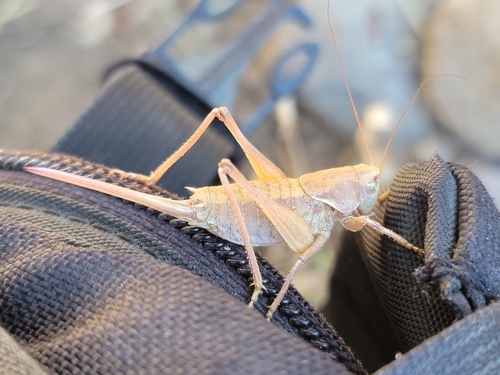
Hemisaga irregularis is a large, flightless bush-cricket belonging to the family Tettigoniidae, a group of katydids known for their robust bodies, long antennae, and stridulating males that produce sound to attract mates. Like other members of the genus Hemisaga, it is nocturnal and cryptically colored, spending daylight hours sheltered in dense vegetation or leaf litter before emerging to forage on plant material and small invertebrates at night. As a ground-dwelling insect, it contributes to nutrient cycling within its habitat and serves as prey for birds, reptiles, and small mammals.
The species is endemic to Australia, where it occupies shrubland and inland wetland habitats such as bogs, marshes, swamps, and fens. Its reliance on moist, densely vegetated terrestrial environments makes it sensitive to changes in local hydrology and vegetation structure.
Hemisaga irregularis is classified as Vulnerable, with a decreasing population trend. The principal threats are habitat loss from expanding housing and urban development, which fragments and destroys the shrubland and wetland habitats it depends on, and altered fire regimes, including both increased fire frequency and fire suppression practices that change vegetation composition and reduce the availability of suitable shelter and food resources. Because the species is flightless, it has limited capacity to recolonize areas after habitat disturbance or to move between fragmented populations.
Conservation attention for this species is largely embedded within broader protections for the shrubland and wetland ecosystems it inhabits, including habitat retention and land-use planning measures in affected regions. Targeted, species-specific conservation programs are not well documented. Given ongoing urban expansion and continued exposure to fire-related habitat disturbance, the species' population trajectory is expected to remain in decline unless habitat protection measures are strengthened.
Hemisaga irregularis is primarily threatened by the spread of housing and urban development, which destroys or fragments its natural habitat. Fires, along with efforts to suppress them, also pose an ongoing risk to the areas where this species lives. Both of these threats are currently ongoing, suggesting a stable but continued level of pressure on the species.
Habitat
Conservation measures underway
Other threatened species in TETTIGONIIDAE
Threatened in Australia
Frequently asked questions
Why is Hemisaga irregularis classified as Vulnerable?
Where does Hemisaga irregularis live?
What are the main threats to Hemisaga irregularis?
Get weekly conservation intelligence
One short digest a week of the most striking species and country data we ship, plus breaking conservation news paired with our database where it matters.
Free, no spam. One-click unsubscribe in every email.