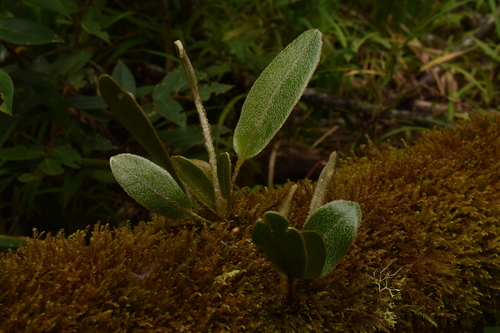
Hard Shield-fern
Polystichum aculeatum
Polystichum aculeatum, the hard shield-fern, is an evergreen fern native to Europe. It is most abundant in upland regions of the British Isles and western France, where it benefits from the combination of mild winters and moist summers, but also occurs more locally across most of Europe except northern Scandinavia, northern Russia; in the Mediterranean region it is confined to high altitudes.
Photo: Wikimedia Commons (CC) via https://en.wikipedia.org/wiki/Polystichum_aculeatum
Taxonomy & Classification
Kingdom
Plantae
Phylum
Tracheophyta
Class
Polypodiopsida
Order
Polypodiales
Family
Dryopteridaceae
Genus
Polystichum
Hard Shield-fern belongs to the family Dryopteridaceae, order Polypodiales, within the Polypodiopsida class.
Species Profile
Polystichum aculeatum, the hard shield-fern, is an evergreen fern native to Europe. It is most abundant in upland regions of the British Isles and western France, where it benefits from the combination of mild winters and moist summers, but also occurs more locally across most of Europe except northern Scandinavia, northern Russia; in the Mediterranean region it is confined to high altitudes. It grows on steep slopes in woodlands. it is sometimes considered an indicator of the presence of ancient woodlands.
Hard Shield-fern (Polystichum aculeatum) faces severe population declines primarily due to habitat loss and fragmentation from agricultural expansion, urban development, and forestry practices. Climate change is altering the cool, moist woodland conditions this species requires, while invasive plant species compete for resources in its native habitats.
Key Facts
Habitat & Distribution
It is found in the counties of Down, Antrim and Londonderry in Ireland, throughout the British Isles and Europe except for the northern countries. It is found in mountain limestone screes in the Jura and the alps, and on alpine and subalpine limestone cliffs.
Threats
IUCN Red List: Critically Endangered
Hard Shield-fern (Polystichum aculeatum) faces severe population declines primarily due to habitat loss and fragmentation from agricultural expansion, urban development, and forestry practices. Climate change is altering the cool, moist woodland conditions this species requires, while invasive plant species compete for resources in its native habitats.
Agricultural expansion
Habitat loss and fragmentation
Urban development
Climate change impacts
Invasive species competition
National vs Global Threat Status
How this species is assessed at the national level compared to its IUCN global status (CR).
| Country | National Status | Global Status | Comparison |
|---|---|---|---|
| EU | LCLeast Concern | CRCritically Endangered | Lower local risk |
| EU | LCLeast Concern | CRCritically Endangered | Lower local risk |
National Red List data sourced from the National Red List Project (nationalredlist.org, ZSL) and country-specific Red List authorities.
Community Sightings
Report a sightingNo community sightings yet. Be the first to report!
Sources & Attribution
How to Cite
IUCN: IUCN (2025). The IUCN Red List of Threatened Species. Version 2025-1. Available at: https://www.iucnredlist.org. doi:10.2305/IUCN.UK.2025-1.RLTS
GBIF: GBIF.org (2025). GBIF Home Page. Available at: https://www.gbif.org
National Red Lists: ZSL (2025). National Red List. Zoological Society of London. Available at: https://www.nationalredlist.org
This page: SpeciesRadar (2025). Hard Shield-fern (Polystichum aculeatum). SpeciesRadar: Intelligence for Earth's Biodiversity. Available at: https://speciesradar.org/species/hard-shield-fern