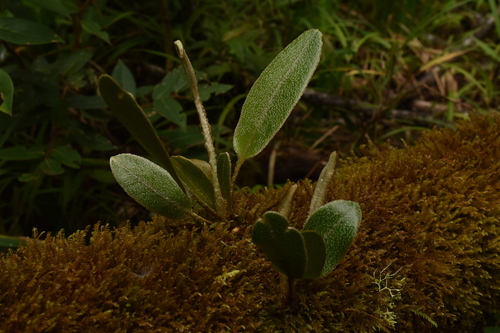
Elaphoglossum muscosum
Photo: (c) Challen Willemsen, all rights reserved, uploaded by Challen Willemsen
Overview
Elaphoglossum muscosum is a small fern species belonging to the family Dryopteridaceae, a diverse genus of neotropical epiphytic and terrestrial ferns often referred to as tongue ferns for their characteristically simple, undivided fronds. Like many of its congeners, this species is adapted to the consistently humid, shaded conditions of montane forest environments, where it typically grows as an epiphyte on moss-laden tree trunks and branches or among leaf litter on the forest floor. Elaphoglossum muscosum is classified as Critically Endangered (CR) by the IUCN, reflecting an extremely restricted known distribution and ongoing pressures on its habitat.
Montane and cloud forest ecosystems in the Neotropics, where species in this genus are concentrated, face continued degradation from agricultural expansion, logging, and infrastructure development, all of which fragment the narrow ecological niches these ferns depend on. Because Elaphoglossum muscosum is known from very few localities, any disturbance to its specific habitat patches poses a disproportionate risk to the species' survival, a common vulnerability among narrow-range epiphytic ferns. Conservation efforts for small-range fern species like this one typically center on protecting remaining tracts of intact montane forest, supporting herbarium-based monitoring to track population persistence, and incorporating such species into broader cloud forest conservation initiatives.
On a positive note, increasing botanical survey efforts across Central and South American cloud forests have improved understanding of the distribution and habitat requirements of rare Elaphoglossum species, offering a stronger foundation for targeted conservation action. Continued fieldwork and habitat protection within existing protected area networks remain the most promising pathways for securing this fern's long-term survival in the wild.
Elaphoglossum muscosum faces severe threats from deforestation and habitat conversion in its restricted montane cloud forest range. The species' extremely limited distribution makes it particularly vulnerable to localized disturbances, while climate change poses additional risks by altering the specific moisture and temperature conditions required for cloud forest ecosystems. Agricultural expansion and infrastructure development continue to fragment the remaining suitable habitat patches.
Habitat
This epiphytic fern inhabits montane cloud forests, typically growing on tree trunks and branches in the humid, mist-shrouded canopy environment. It requires the specific microclimate conditions found in these high-elevation tropical forests, including consistent moisture, filtered light, and stable temperatures.
Other threatened species in Dryopteridaceae
Frequently asked questions
Why is Elaphoglossum muscosum classified as Critically Endangered?
Where does Elaphoglossum muscosum live?
What are the main threats to Elaphoglossum muscosum?
Get weekly conservation intelligence
One short digest a week of the most striking species and country data we ship, plus breaking conservation news paired with our database where it matters.
Free, no spam. One-click unsubscribe in every email.