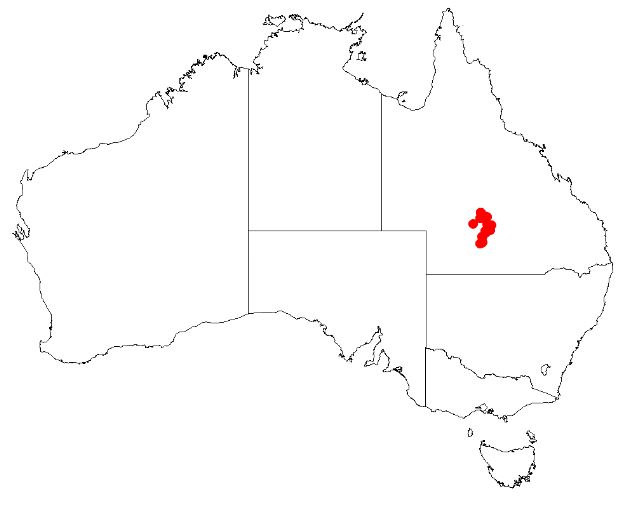
Hakea maconochieana
Photo: Wikimedia Commons (CC) via https://en.wikipedia.org/wiki/Hakea_maconochieana
Overview
Hakea maconochieana is a woody shrub in the family Proteaceae, characterised by the rigid, sclerophyllous foliage and hard, woody seed capsules typical of the genus Hakea. Like its relatives, it likely produces clusters of small flowers that yield nectar and pollen resources for insects and birds, contributing to local pollinator networks. Its seeds are retained in woody follicles that open following fire or plant death, a serotinous strategy that allows the species to regenerate after disturbance events.
The species is restricted to Australia, where it occupies rocky habitats, typically growing in shallow, well-drained soils associated with outcrops or stony substrates. This specialised habitat preference limits its natural distribution to a relatively narrow range of suitable sites.
Hakea maconochieana is classified as Endangered, with a decreasing population trend. Livestock farming and ranching pose an ongoing threat, as grazing animals can damage or destroy seedlings and mature plants, compact soils, and alter the vegetation structure of its rocky habitat. Invasive non-native species, including introduced plants and animals, further threaten the species by competing for resources, altering fire regimes, or directly damaging plants, compounding the pressures from grazing activity.
Conservation efforts for threatened Hakea species in Australia typically involve habitat protection measures, monitoring of remaining populations, and management of grazing pressure within known sites. Seed banking and ex situ propagation are also commonly employed for restricted Proteaceae species to safeguard genetic material.
Given the continuing threats from grazing and invasive species, and the species' limited and specialised habitat, the outlook for Hakea maconochieana remains concerning. Without effective control of these pressures, continued population decline is expected.
Hakea maconochieana is primarily threatened by grazing animals from livestock farming, which can damage or destroy plants, and by invasive non-native species that compete with or disturb its natural habitat. Both of these pressures are currently ongoing and active. Based on the available information, these threats appear to be stable rather than clearly increasing or decreasing.
Habitat
Conservation measures underway
Other threatened species in PROTEACEAE
Threatened in Australia
Frequently asked questions
Why is Hakea maconochieana classified as Endangered?
Where does Hakea maconochieana live?
What are the main threats to Hakea maconochieana?
Get weekly conservation intelligence
One short digest a week of the most striking species and country data we ship, plus breaking conservation news paired with our database where it matters.
Free, no spam. One-click unsubscribe in every email.