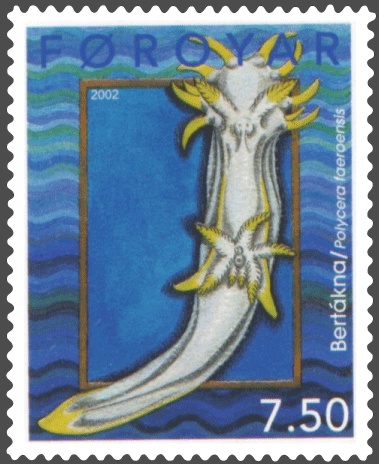
Polycera faeroensis
Local name: gulskäggsnuding
Photo: Wikimedia Commons (CC) via https://en.wikipedia.org/wiki/Polycera_faeroensis
Overview
A detailed profile for this species is sourced from the IUCN Red List of Threatened Species as assessments become available.
Polycera faeroensis faces significant threats from ocean acidification, which weakens the shells of its molluscan prey and disrupts the delicate pH balance of its shallow marine environment. Climate change-induced warming of North Atlantic waters threatens to shift the distribution of its specialized prey species, potentially creating food scarcity. Coastal development and marine pollution in the Faroe Islands and surrounding regions further degrade the pristine rocky shore habitats essential for this nudibranch's survival.
Habitat
This nudibranch inhabits shallow rocky shores and kelp forests in the cold North Atlantic waters around the Faroe Islands, typically found at depths of 5-30 meters. It requires pristine marine environments with abundant bryozoan colonies and other small invertebrates that serve as its primary food sources.
Other threatened species in Polyceridae

Threatened in Faroe Islands


Frequently asked questions
Why is gulskäggsnuding classified as Vulnerable?
Where does gulskäggsnuding live?
What are the main threats to gulskäggsnuding?
Get weekly conservation intelligence
One short digest a week of the most striking species and country data we ship, plus breaking conservation news paired with our database where it matters.
Free, no spam. One-click unsubscribe in every email.