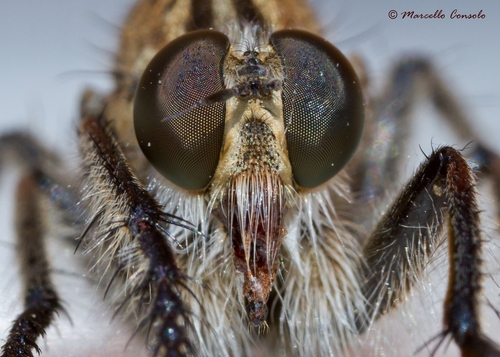
Machimus gonatistes
Photo: Photo: (c) Marcello Consolo, some rights reserved (CC BY-NC-SA)
Overview
Gul skægrovflue (Machimus gonatistes) is a large, robust robber fly characterized by its distinctive yellow coloration and prominent bristly 'beard' of setae around the face. As an apex aerial predator, this species plays a crucial role in controlling populations of other flying insects, including flies, bees, and beetles, which it captures during dramatic mid-air hunts.
Machimus gonatistes, a robber fly species, faces severe population decline primarily due to habitat loss and degradation of its specialized coastal and sandy habitat requirements. The species has an extremely limited distribution range, making it highly vulnerable to local environmental changes and human disturbance. Climate change and coastal development further threaten the remaining suitable habitats.
Habitat
Machimus gonatistes inhabits sun-exposed, extensively grazed grasslands and heathlands with scattered shrubs and abundant wildflowers. The species requires areas with bare ground patches for territorial perching combined with diverse flowering plants that attract the wide variety of prey insects essential for its survival.
Other threatened species in Asilidae


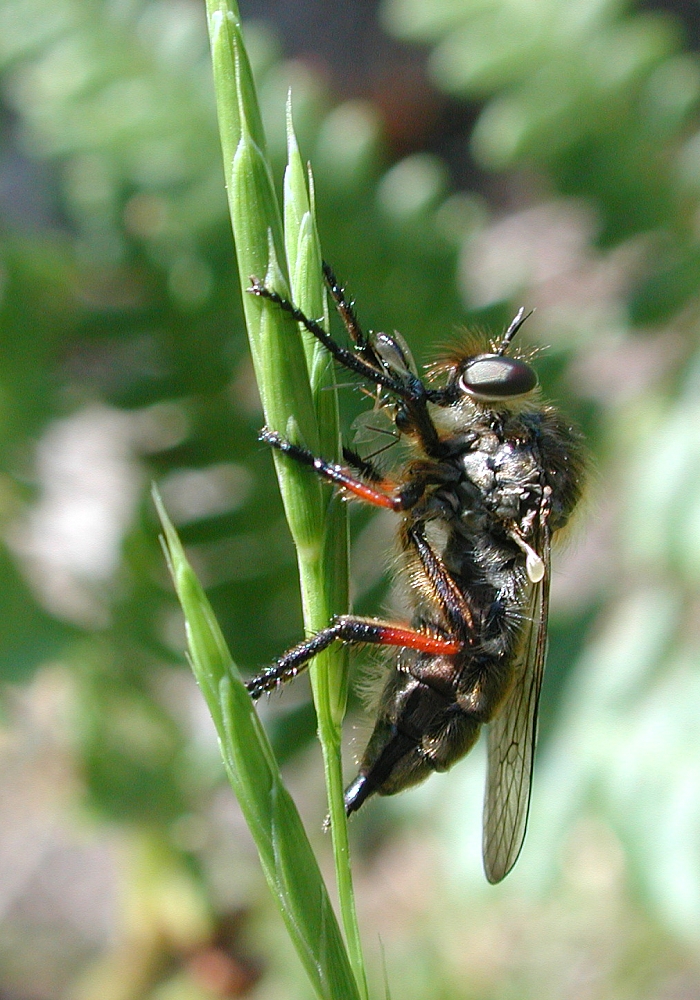
Threatened in Austria
Frequently asked questions
Why is Machimus gonatistes classified as Critically Endangered?
Where does Machimus gonatistes live?
What are the main threats to Machimus gonatistes?
Get weekly conservation intelligence
One short digest a week of the most striking species and country data we ship, plus breaking conservation news paired with our database where it matters.
Free, no spam. One-click unsubscribe in every email.